Station 7
Captain’s bridge
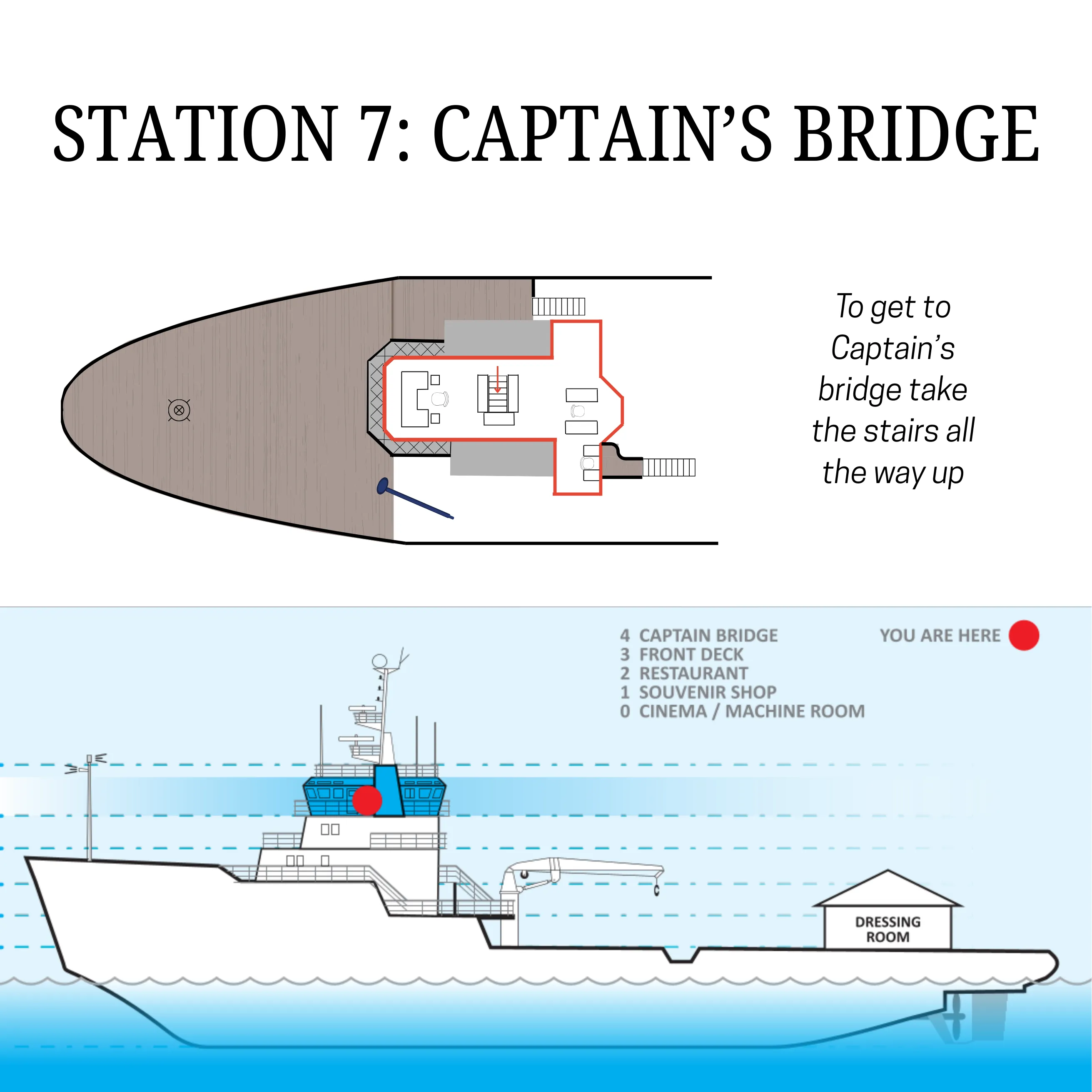
Welcome to the captain’s bridge. This is the eyes of the icebreaker. You are now at a height of 14m above the sea. Panorama windows let you observe front and back decks, and the sea all around.
Why it is called “bridge” if it doesn’t even look like a bridge? Traditionally, sailing ships were commanded from the quarter deck. With the arrival of paddle steamers, engineers required a platform from which the captain could inspect the paddle wheels and where the captain’s view would not be obstructed by the paddle houses. A raised walk way connecting the paddle houses – literally abridge – was therefore provided. When the screw propeller superseded the paddle wheel, the bridge was no longer an actual bridge, but the name remained.
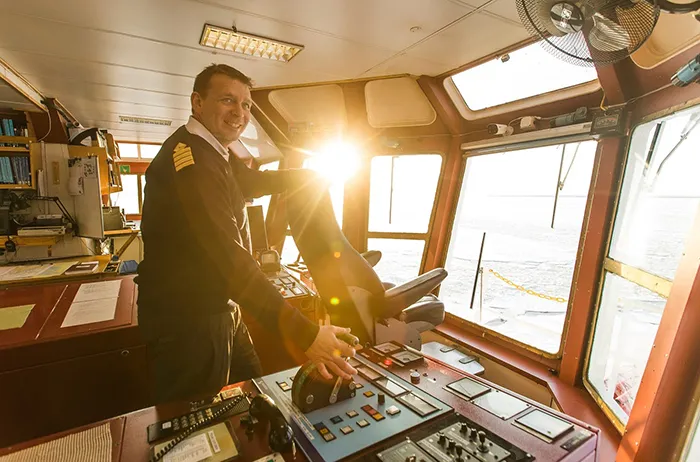
The bridge of a ship is the room from which the ship can be commanded. When a ship is underway the bridge is manned by an “officer of the watch” aided by an “able seaman” acting as lookout. During critical manoeuvres the captain will be on the bridge, supported by the 1st Officer at the wheel and sometimes a pilot if required.
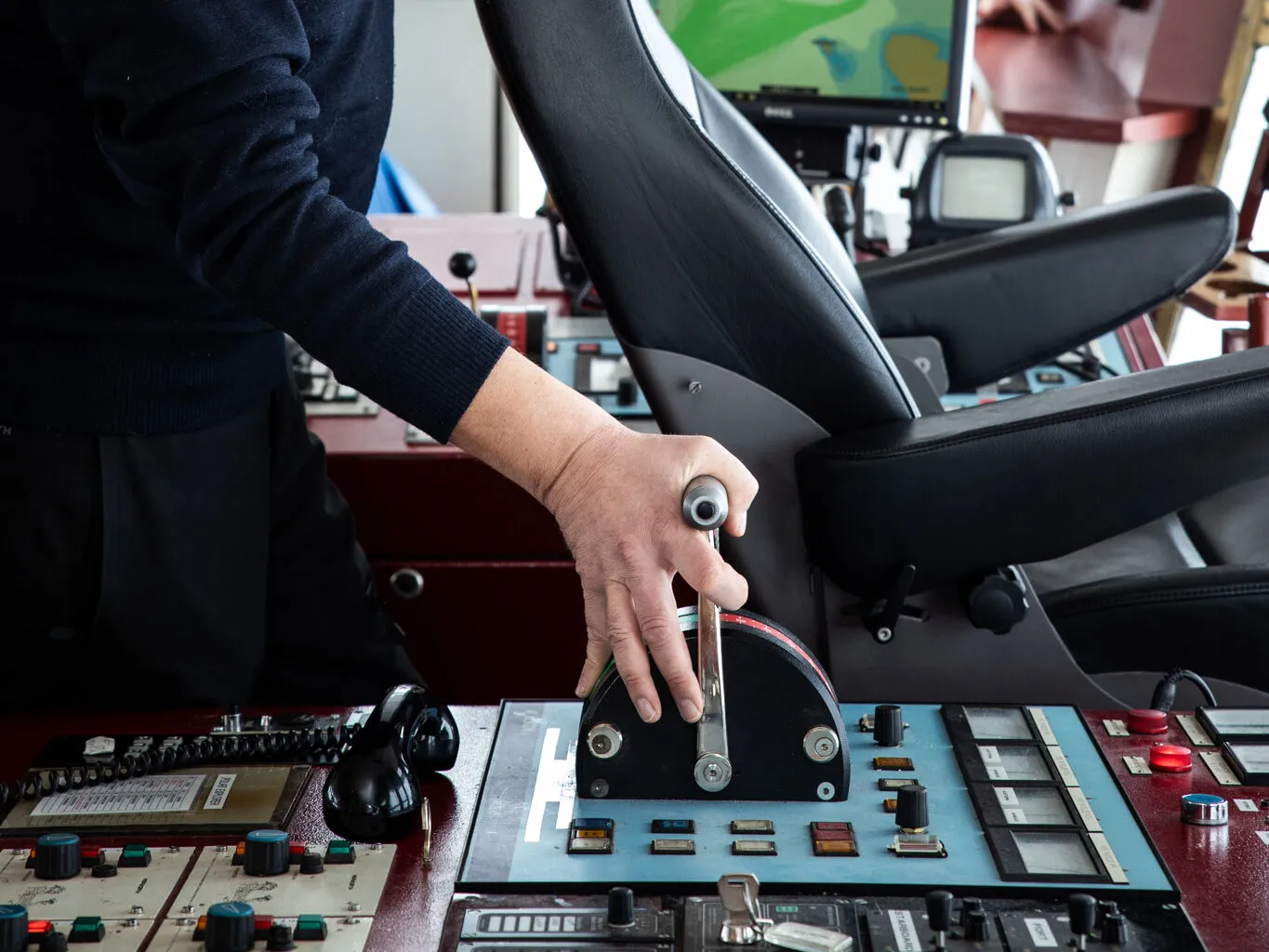
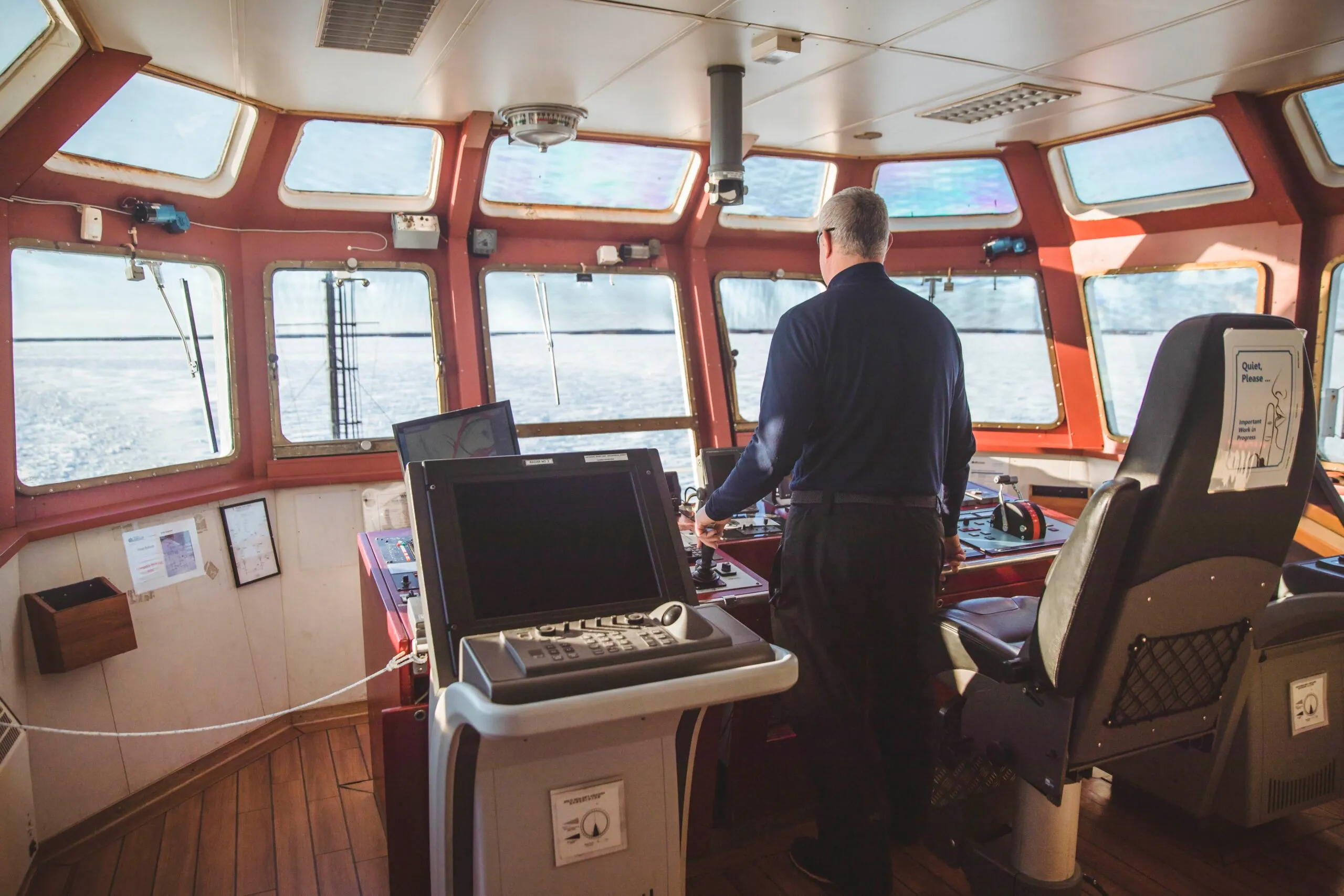
Multiple equipment and systems are used to manoeuvre the massive ship in the frozen sea. You can find a gyro compass, dual radars, GPS, autopilot, electronic charts and various communication equipment.
The ship has two steering posts, one in the front part of the bridge, which is used for sailing forward, and the other in the rear to facilitate port mooring, anchor handling and, in the past, cargo supply for oil rigs as well.
In order to enter the maritime territory of another country the vessel must contact the local port and hoist the flag of that country. That is why you can see, in the back of the room on the left, a selection of world flags that are flown from by the ship at the entrance to the maritime borders of different countries.
Thank you for touring our ship. We hope that you enjoyed this tour and that you will share this unique experience with your friends at home.