Station 6
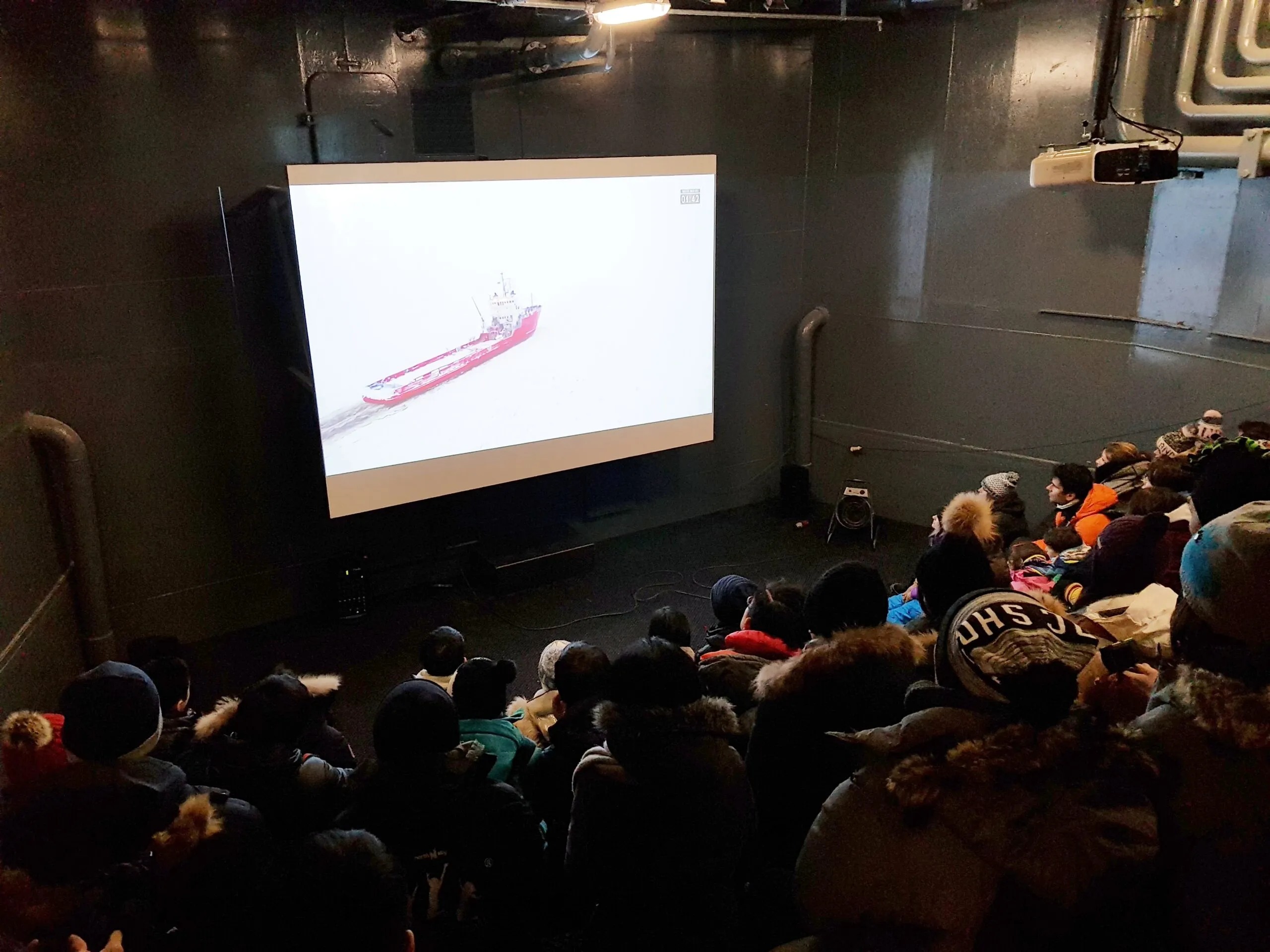
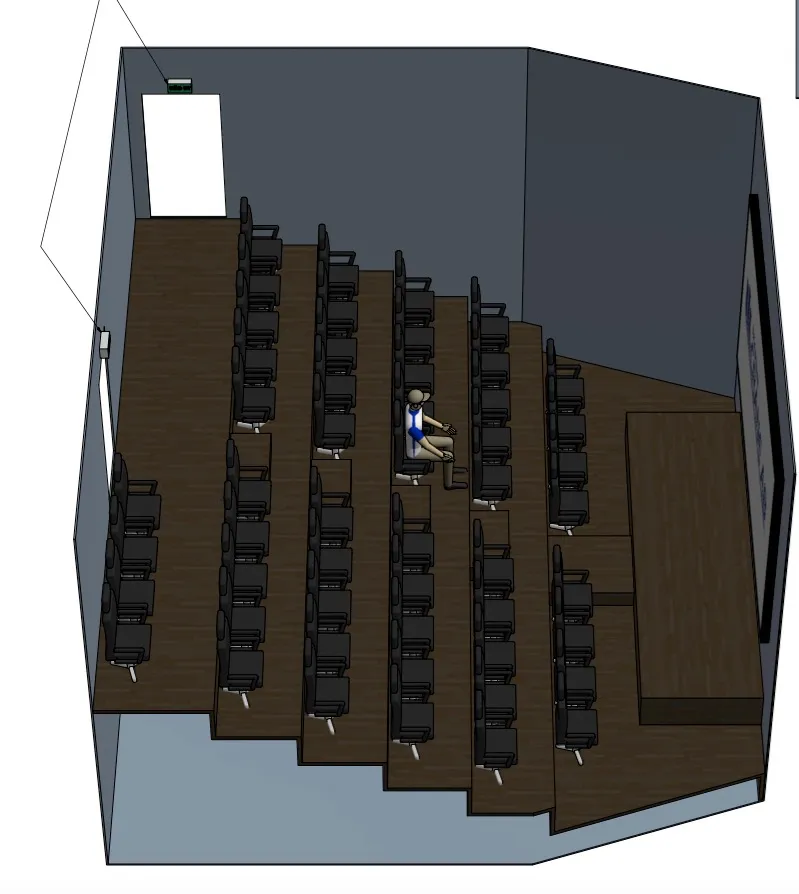
Icebreaker theatre
Welcome to Icebreaker Theatre. This auditorium-style room had a different use during the Polar Explorer’s industrial age. Four huge cement tanks were located here, each of which could store 50 cubic meters of cement. Cement was needed for oil industry. After oil is discovered in the bed of the Arctic Ocean, deep holes are drilled to extract it. These holes are tunnels out of which oil flows under pressure and so they have to be kept open. For this reason the walls of the tunnel had to be reinforced with cement. The task of the Polar Explorer in those days was to supply cement to oil extraction sites in the Arctic Sea.
Icebreaker ships all over the world perform multiple tasks. Some only make the channels in the frozen seas for other ships. Others, like Polar Explorer, are multifunctional. The construction and appearance of each icebreaker ship can be very different, depending on its function. The main secret of the icebreaker is hidden under the water – its strong hull and bow to break the ice. The hull’s sides are designed in a special ways that the ice cannot press against the vessel under water if it gets stuck. This specific construction is what make the ship an icebreaker and gives it its “Ice Class” designation.
Enjoy this 10-minute video about different icebreakers in the world in different times.
Once you’ve finished watching the video, return to main deck and chose the direction to the next station of the tour. Please remember to return your ear protectors after leaving the machine departments.
.webp)