.webp)

What It's Like to Swim in Icy Arctic Water, and Why You'll Love It
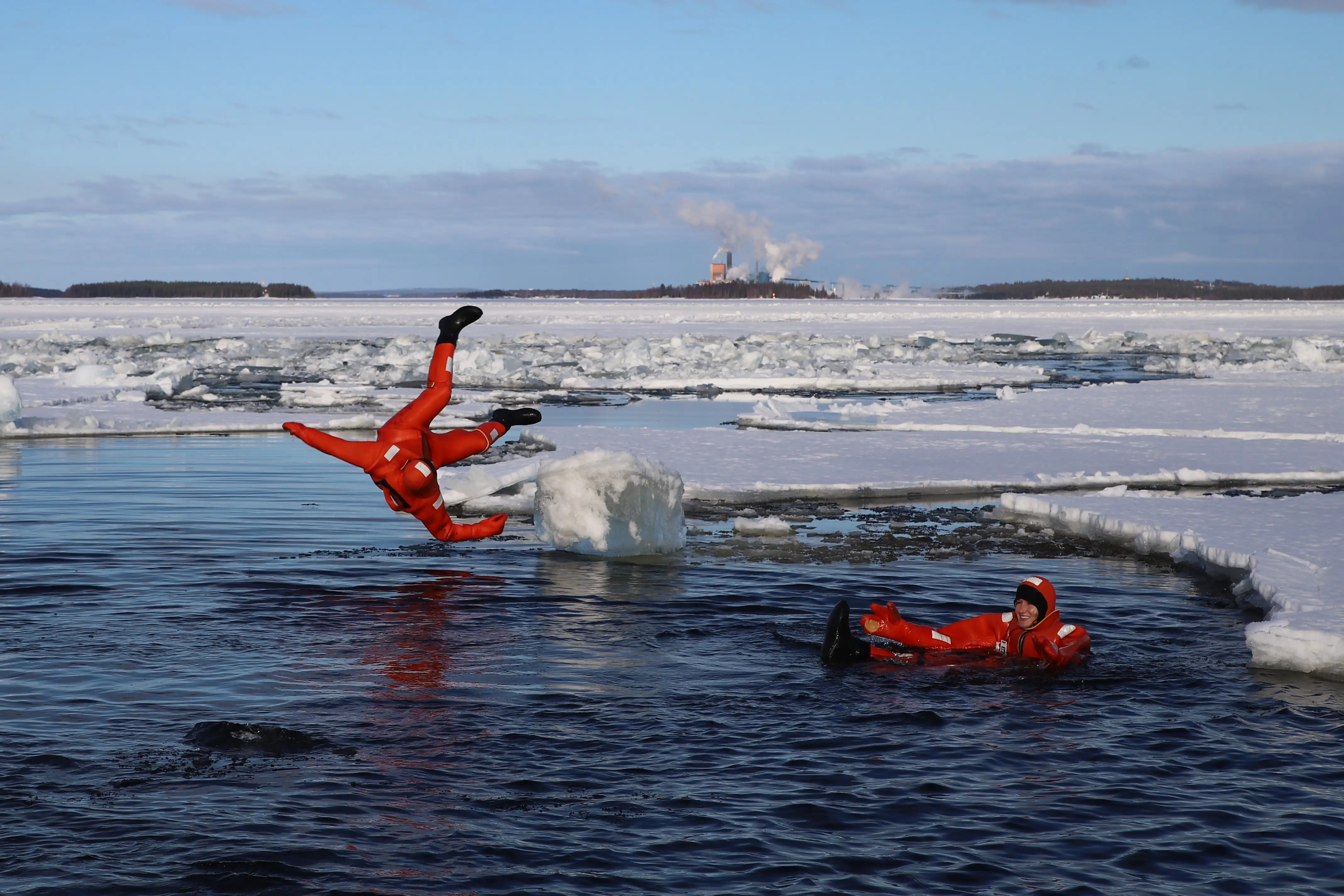
There is a moment, somewhere between stepping off the ladder and breaking the surface, where your body simply cannot process what is happening. Then something follows: a feeling that thousands of explorers describe as the most alive they have ever felt.
What Is Arctic Ice Swimming, Exactly?
On board the Polar Explorer Icebreaker, one of the few icebreaker expeditions in the world where you can do this, there is an activity unlike anything else you can book. After the ship cuts its path through the frozen Bothnian Bay and comes to a stop on the open ice, explorers are invited to do something that sounds, on paper, insane: climb down a ladder into the frozen Arctic sea.
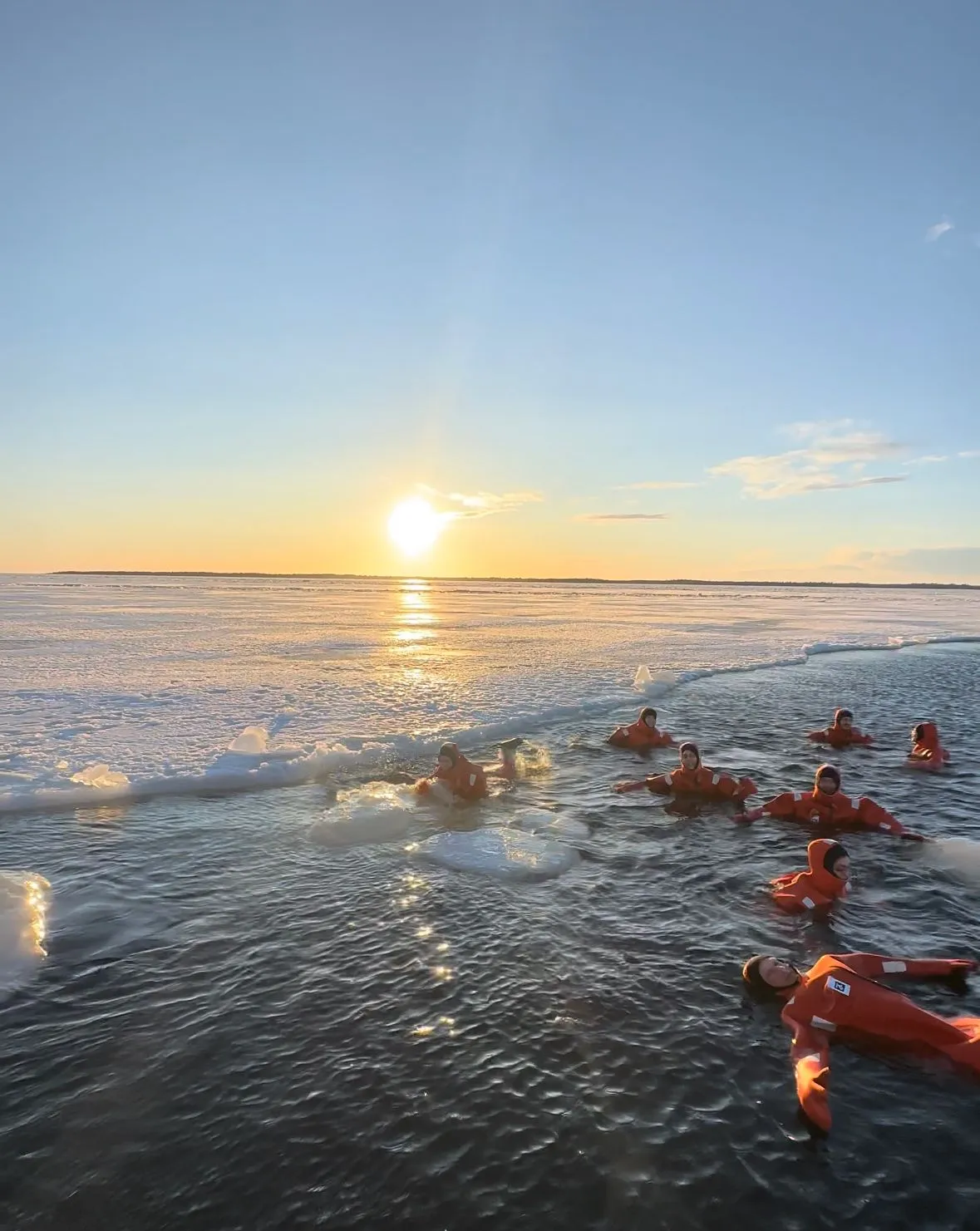
This is not a polar plunge in the spirit of a fleeting shock-and-scramble. You wear a specially designed insulated thermal float suit that keeps the body buoyant and warm. You float. You look up at a vast Arctic sky. You drift, in no hurry, in water that is technically below the freezing point of freshwater. And around you, as far as you can see in every direction, the Bothnian Bay stretches out in a flat, white silence that feels like the far edge of everything.
Arctic ice swimming in Lapland has become one of the most sought-after experiences in Lapland. But no amount of reading about it prepares you for what it feels like in your body. So let us walk through it, step by step.
What Your Body Feels, Second by Second
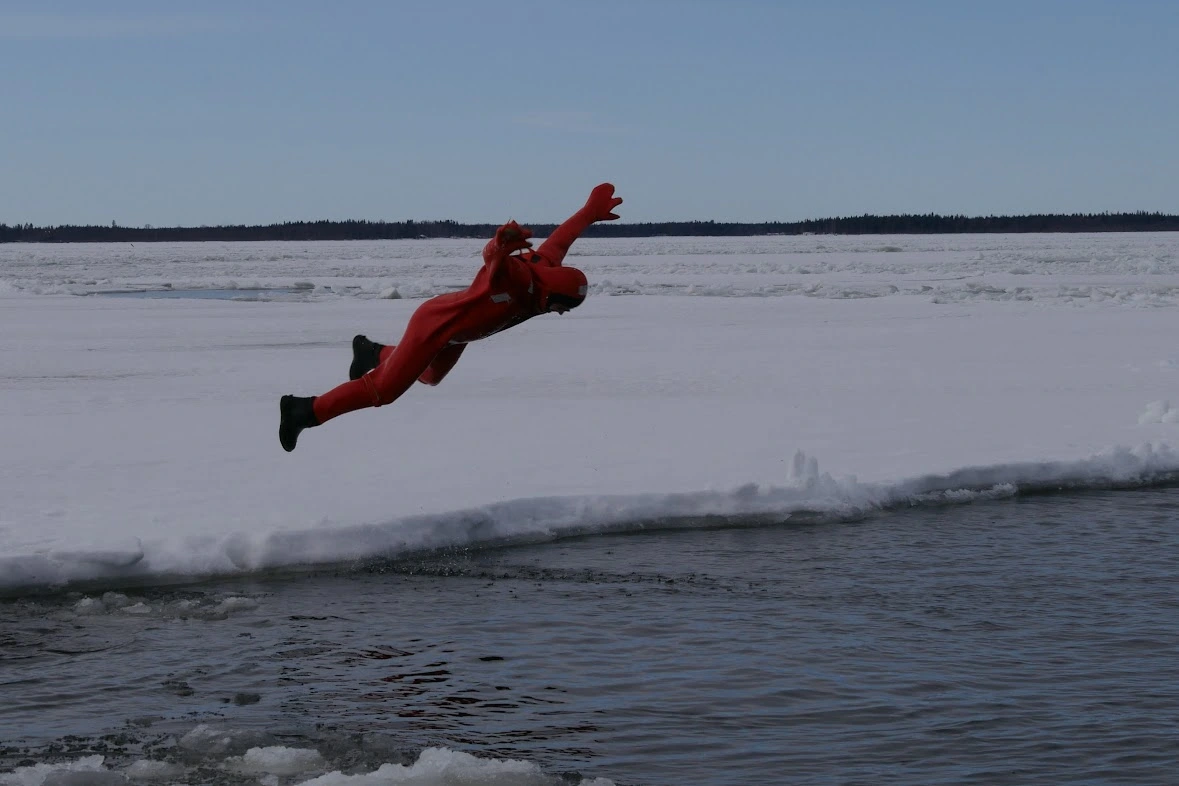
The experience does not arrive all at once. It builds in layers, each one more unexpected than the last.
1. The descent. The rungs of the ladder are coated in ice. The air hitting your face is somewhere between minus fifteen and minus twenty-five degrees Celsius. You grip the rail. The water below is dark and dead still where the suits have not yet disturbed it. Your heartbeat is already up, not from cold, but from anticipation.
2. First contact. Your feet enter first. Through the suit, you feel pressure rather than cold: a dense resistance that wraps right around you. Then your legs, your waist, your torso. The suit holds you up like a cork. You are not sinking. You are floating, suspended, in one of the most remote stretches of ocean on the planet.
3. When your lungs catch up. In the first five seconds, your breathing shortens on its own. This is your body's cold-shock response, and it is normal and safe in a float suit. Then you breathe out. Slowly. And the tightness lets go. Some people laugh straight away. Some go very quiet. Both are fine.
4. Stillness. Floating in minus-two-degree water inside a thermal suit, surrounded by Arctic ice, with the Polar Explorer few metres away, the world goes quiet in a way you rarely get to feel. The sky is enormous. The only sound is the faint creak of ice. Most people find their minds go still.
5. The body rush. After a minute or two, something shifts. The cold pressing on the exposed skin of your face drops into the background. Your body is working hard to hold its core warmth, and the result is a spreading heat in your chest, the kind of high people chase. This is not a metaphor. Endorphins are flooding your system.
6. Coming out. Climbing out of the Arctic water is, oddly, one of the best parts. The moment your body clears the surface and the Arctic air hits the wet suit, you feel the contrast in full. Hands on the ladder. One rung, then another. And then you are standing on the ice, and the feeling that arrives is hard to put into words.
The Thermal Float Suits That Make It All Possible
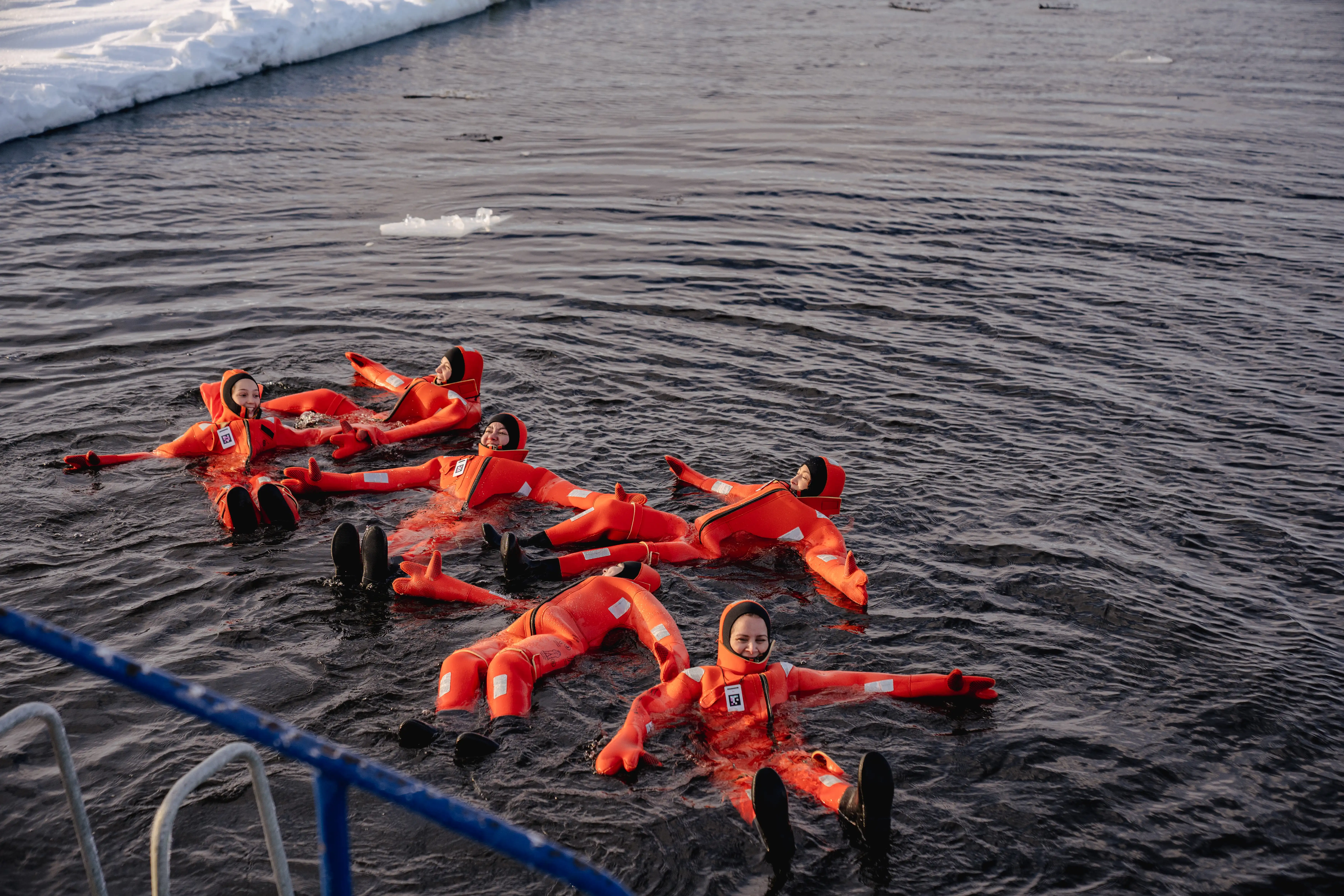
Arctic ice swimming at this level of comfort and safety comes down to the Polar Explorer's specially designed insulated survival suits. These are not wetsuits. They are fully insulated, fully buoyant thermal float suits, standard-issue for maritime safety in Arctic conditions, and they turn what would otherwise be an ordeal into one of the best things a winter traveller can do.
What the suits do:
They keep you afloat on their own. You do not need to tread water, swim, or do anything to stay on the surface. The suit holds you up, so you can relax and look around rather than fight the water.
They insulate your core. While your face is exposed to the cold water and air, your body is kept off direct cold-water contact. This is what makes floating in sub-zero water not just survivable but actually pleasant.
They are easy to put on. The crew guides every explorer through suiting up before the swim, and it takes only a few minutes. No experience, no special fitness level, and no swimming ability is required.
They come in all sizes. The Polar Explorer carries suits for a very wide range of body types. If you have questions about fit or accessibility, the FAQs page covers common queries in detail, and you can always contact the team directly.
Safety first. The Arctic ice swim on the Polar Explorer is one of the most carefully managed outdoor experiences in the Arctic. The crew keeps watch the whole time, the swim area is enclosed and controlled, and explorers are never in the water without supervision. The whole thing is built to be safe for people with no prior cold-water experience.
Addressing Your Fears Honestly
Let us be clear about something: the people who are nervous before the ice swim are almost always the ones who are loudest about wanting to go again right after. Nervousness makes sense. Minus-two-degree water is something your body has no evolutionary framework for. But here is what is actually true about the fears most people arrive with.
"I won't be able to breathe."
To keep the freezing water out, the thermal float suit needs a snug seal around the neck. When you first zip it up, that tight fit can feel restrictive and trick you into thinking you cannot catch a full breath. It is a normal reaction to the safety seal. Once you relax into the water and feel yourself floating, you adjust and it passes quickly. The crew makes sure your suit is fitted correctly before you head out to the ice.
"I'm not a strong swimmer."
You do not need to be any kind of swimmer. The suit keeps you on the surface without any effort from you. Plenty of explorers who cannot swim at all have taken the dip and come out calling it safe and easy.
"I have a health condition."
Cold water swimming does put some stress on the cardiovascular system. If you have a heart condition, high blood pressure, or significant respiratory issues, speak with your doctor before the trip and let the crew know. For most healthy adults of any age, the float suit experience sits well within safe limits.
"I'll be too cold."
Your face will be cold. The rest of you will be insulated. Most people describe a strong, spreading warmth that kicks in within the first minute as the body fires up its own heat.
What Happens After You Climb Out
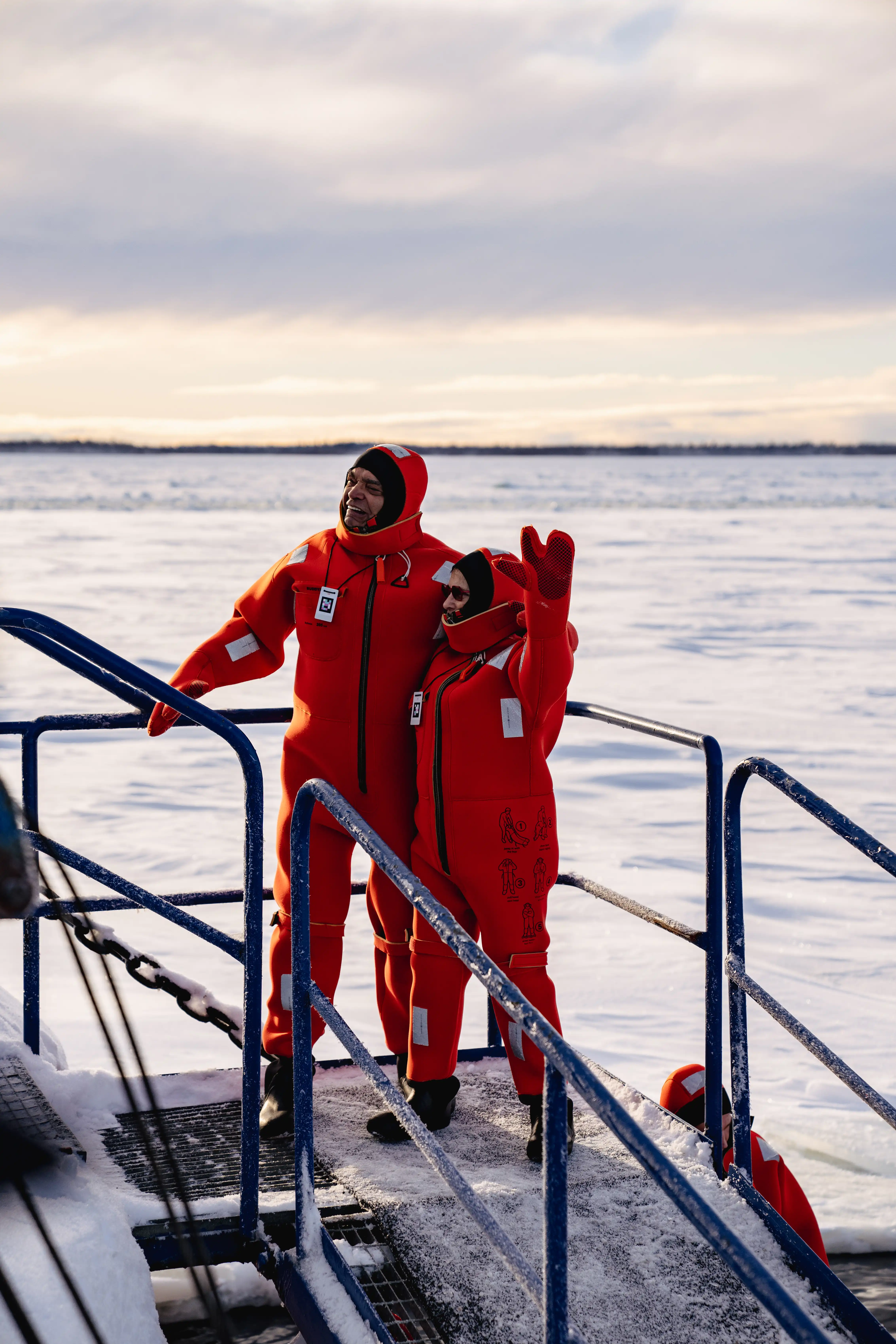
The experience does not end when you leave the water. In many ways, what follows is just as good as what came before.
Back aboard the Polar Explorer, you change out of the float suit and gather in the ship's warm interior. The crew serves hot drinks, and this is one of those moments that stays with you for good: the contrast between the frozen world you were floating in twenty minutes ago and the warmth of the ship around you, the other explorers all wearing the same stunned look, the conversation that comes easily because everyone in the room has just shared something no one else in their daily lives will quite understand.
Your skin will be flushed and warm. Your mind will feel unusually clear. And there will be an energy in your body that most people describe as something between post-exercise calm and the quiet pride of having done something you were not sure you could do.
Why People Say It Changes Them
The claim that an experience "changes you" is one of the most overused lines in tourism, and we know it. But something does happen to people who float in the Arctic Ocean, and it is worth explaining what.
There is a specific psychological effect that comes from voluntarily doing something your body reads as a threat, discovering that you are safe, and then finding that what follows is good rather than terrible. Psychologists call this optimal anxiety: the zone just past your comfort edge where the most meaningful experiences live.
The Arctic ice swim on the Polar Explorer sits right in that zone. The nervousness is real. The shock is real. And so is what follows: a clarity, a lift in mood, and a quiet pride that stays with you long after you have dried off and gone home. People bring it up for years. They bring other people back to share it. They describe it as the thing they measure other experiences against, the moment they felt simply, fully alive.
How to Prepare for Your Ice Swim
The good news is that preparation is minimal. The float suits do most of the work. But a few things will make your swim more comfortable.
Wear thermal base layers underneath your winter clothing to stay warm and comfortable. The survival suit is worn over your clothes, so well-fitting layers work best when putting it on. Loose or bulky clothing can get caught in the zipper and may make the suit feel less comfortable to wear.
Remove rings and other loose jewellery before the swim. When taking off the survival suit, these items can become caught in the suit, and there is a risk of them being lost.
Do not eat a heavy meal right before. A light snack is fine, but a large meal plus a float suit is an uncomfortable mix.
Tell the crew about any medical conditions that might matter. The team is experienced and discreet, and telling them early lets them give you the best possible swim.
Bring an action camera if you want photos. Some explorers go in with nothing in their hands and just be present. Others capture the moment. Both are fine. Polar Explorer also offers a photography service, so even if you decide to simply enjoy the moment, the crew will capture it for you.
Common Myths About Arctic Swimming, Answered
You need to be physically fit to do the ice swim.
Not true. The float suit keeps you on the surface without any physical effort. The swim is open to explorers of all fitness levels. The crew can advise on suitability for specific health situations.
It's only for young people.
Explorers of very wide age ranges have taken the Arctic dip on the Polar Explorer. It is about openness and curiosity, not physical youth. Some of the keenest participants are well into their sixties and seventies.
You'll be in the water for a long time.
Most explorers spend between five and fifteen minutes in the water. You enter together with a group and exit before the next group arrives, but the experience still follows your own pace. If at any point you do not feel comfortable, you can get out of the water at any time.
It will ruin the rest of your day.
The opposite is almost always true. The post-swim endorphin release and the warmth that follows leave most explorers energised, clear-headed, and in good spirits for the rest of the afternoon and evening.
It's a gimmick.
This one we understand. In an era of extreme tourism and manufactured bucket list moments, a little scepticism is healthy. What we can tell you is that the Arctic ice swim on the Polar Explorer has been called, by explorers who arrived sceptical, the biggest surprise of their travelling lives. It is real. The water is real. The cold is real. And so is everything that follows.
Ready to Float in the Arctic?
Book your place on the Polar Explorer Icebreaker expedition and feel the ice swim for yourself. Departures run through the winter season in Swedish & Finnish Lapland.
Visit icebreaker.fi/booking to reserve your Arctic expedition.
Follow the Explorer. Once in a lifetime.