.webp)

Walking on the Frozen Sea: A Once-in-a-Lifetime Photo Opportunity
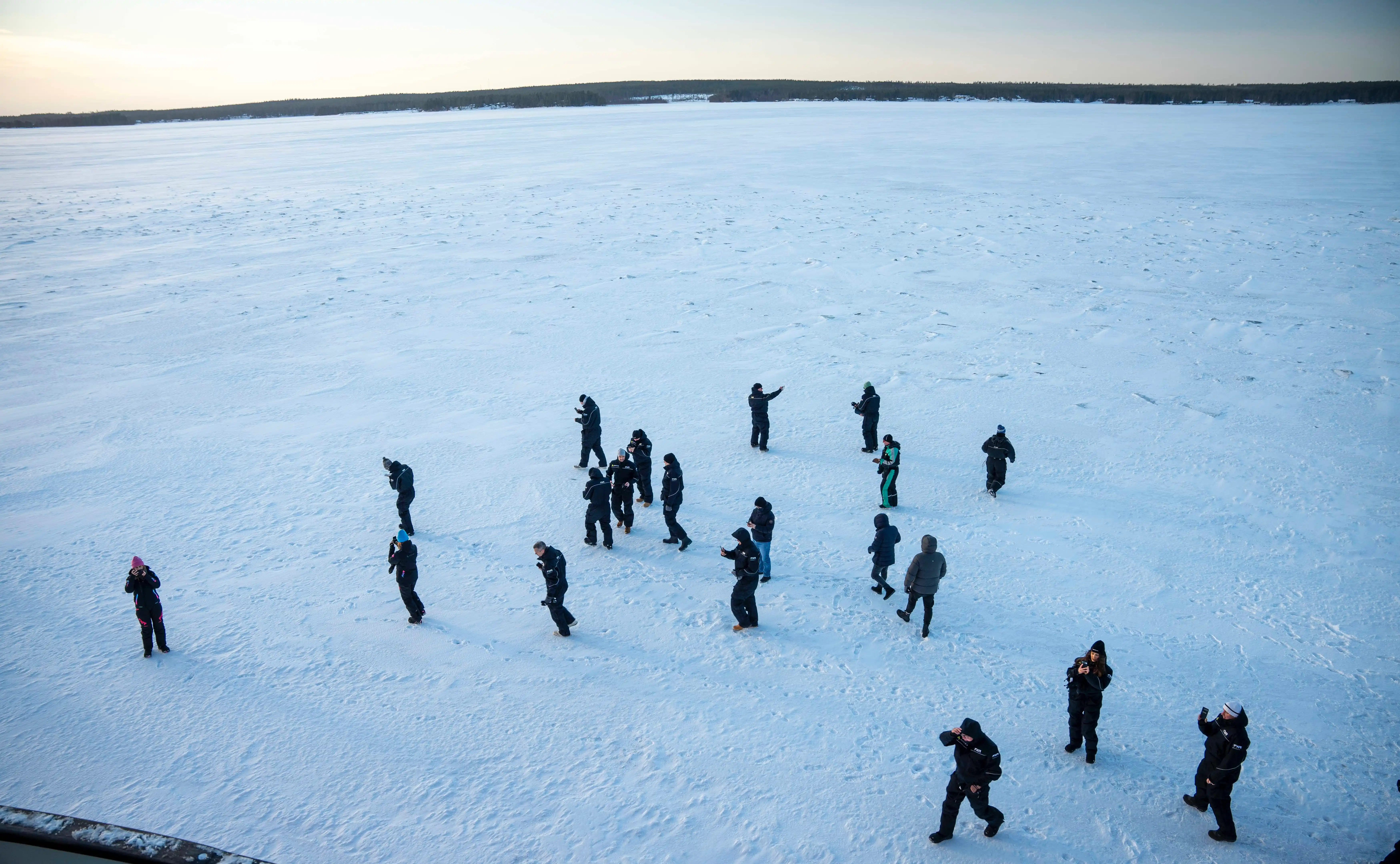
The Bothnian Bay stretches to every horizon,The Bothnian Bay stretches to every horizon, flat and white and wider than your eye can follow. You are standing on it. Beneath your feet: frozen sweet water, up to a metre thick. The Polar Explorer Icebreaker rises behind you, more than twenty metres of red steel. Your camera is ready. The light is unlike anything you have ever photographed.
The Photographer's Perspective
Some photographs are the ones people find themselves looking at years later, the one that brings the moment back so completely that the cold almost returns to their face. Walking on the frozen Bothnian Bay from the Polar Explorer Icebreaker is where those photographs get made.
The Scene: What You Are Actually Looking At
The Bothnian Bay is the northernmost arm of the Baltic Sea, and in midwinter it freezes solid enough to bear the weight of an icebreaker. The Polar Explorer is one of the few vessels in the world powerful enough to cut through ice that can be up to one metre thick, and one of the only expeditions in the world where explorers can step off the ship and walk on the frozen sea.
This is not a frozen lake. It is not a river or a harbour. It is the open sea, frozen, and you feel that difference in your body. Lakes have edges. Rivers have banks. The Bothnian Bay has nothing but distance. The horizon is a clean line between white ice and blue-grey sky, with no interruption from land or trees or any human structure except the ship itself. For a photographer, there are few places on Earth this clean to compose in.
The scale of the ship against that flat white is the first thing that strikes most photographers. The Polar Explorer is 78 metres long, 22 tall, and 14 wide. On the sea, she looks like a large vessel. Standing on the ice, looking up at her red hull rising from a crack of dark water in the otherwise pure white surface, she looks like something from another world. That is your first photograph, and you have not yet taken a step.
Arctic Winter Light: The Photographer's Great Gift
Every photographer who works in natural light knows that the best light of the day is golden hour, the period just after sunrise and just before sunset when the sun is low and the light goes warm and directional and soft. In Lapland in winter, golden hour is not an hour. It is the whole day.
This far north, the winter sun barely clears the horizon even at midday. For four to five hours each day, it tracks low across the southern sky at an angle that would be considered perfect light anywhere else. The shadows are long and directional. The light is warm-toned against the blue of the ice. The contrast between the warmth in the sky and the cool white of the frozen sea gives you a colour palette that is hard to find at any other time of year, or anywhere else.
This means that whenever you step off the Polar Explorer onto the ice, you are stepping into what photographers wait hours for in other parts of the world. You do not need to get up before dawn or stay out until dusk. The light finds you.
On overcast days
Do not be disappointed by cloud cover. An overcast sky over the frozen Bothnian Bay gives you a different light, and just as strong: flat, diffused, shadowless, with the white of the ice and the pale grey of the sky blending at the horizon into something soft and strange. Portraits shot in this light come out soft and bright. Abstract shots of ice texture turn almost graphic in their simplicity. A lot of experienced photographers go looking for this kind of light on purpose.
When the northern lights appear
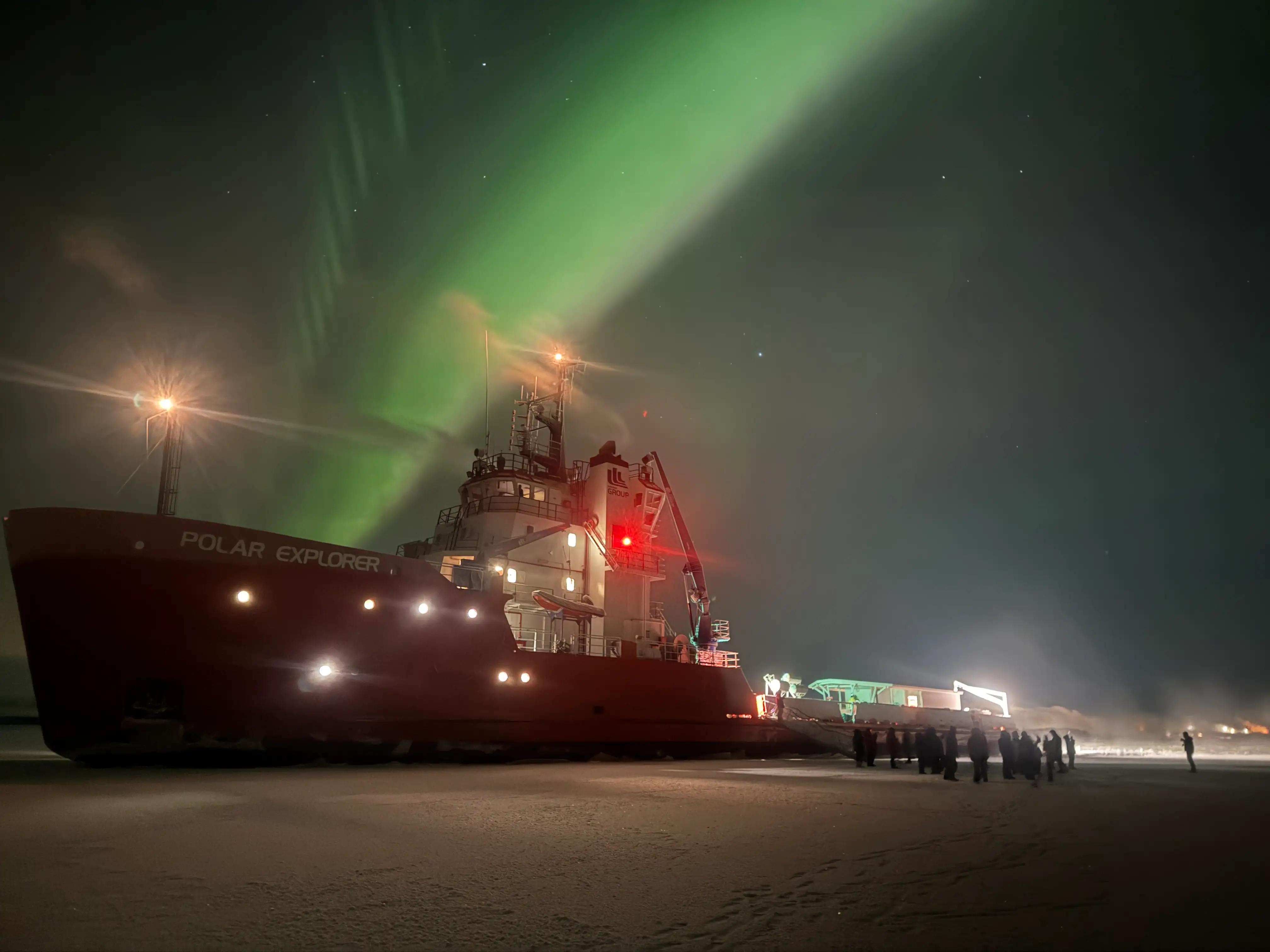
The Polar Explorer runs right through the dark winter months, the same window as the Aurora Borealis season, and there are evening aurora departures timed for when the sky is at its darkest. Nothing about the aurora is guaranteed; it arrives on its own terms. But when it does show over a frozen sea, green light moving above an icebreaker locked in the ice, you are holding the kind of shot that makes photography careers. If the aurora is what you are coming for, plan around an evening departure and ask the team directly about timing and likelihood through the season.
The Icebreaker in Your Frame
The Polar Explorer herself is the centrepiece of the most iconic photographs taken on this expedition. Here is how to think about composing her into your images.
From the ice, looking up
The most striking shot is looking up at the ship's hull from standing position on the ice. The bow of the Polar Explorer rises at an angle that, set against the scale of the vessel and the sky, carries real drama. Get low, even crouching to ice level, and you push the perspective further. Include the channel of dark water the ship has cut through the ice in the foreground, and you have foreground interest, mid-ground hull, and sky all working in a single frame.
Wide and environmental
Step back as far as you can from the ship and shoot wide. A wide-angle lens or a phone set to its widest mode captures the full scale of the ship against the vast white plane of the sea. With a person in the foreground for scale, the size difference is hard to believe. These are the shots that people who were not there struggle to take in.
The ship from the side
Walking around to the flank of the Polar Explorer gives you a different angle: the full length of the vessel, the trail of broken ice in her wake, the red hull against white and blue. In good light, this is a strong horizontal composition that works particularly well in wide format.
Ice Textures, Pressure Ridges, and Abstract Shots
One thing that surprises photographers who come to the Bothnian Bay expecting only big landscape shots is the richness of detail at ice level. The frozen sea is not a smooth, featureless white surface. It is a landscape in miniature, full of texture and structure.
Pressure ridges
Where ice sheets have collided and buckled under pressure, pressure ridges form: jagged eruptions of fractured ice that can rise a metre or more above the surrounding surface. They look almost built. Shot close, they read as abstract. Shot from a distance with a wide lens, they give you texture and scale across the otherwise flat white surface. In warm directional light, shadows fall into the ridges and the ice takes on depth and colour that looks nothing like the uniform white of a winter photograph taken from a car window.
The cut channel
The channel of open water that the Polar Explorer has cut through the ice is one of the most photogenic parts of the scene. Dark Arctic water against white ice, with the ship's hull behind it, and the colour contrast alone is worth the walk over. The edge of the channel, where broken ice floats at angles in the dark water, rewards a closer lens and a slower eye.
Close-up ice abstracts
Get your camera down to ice level and look at what is right around you. Bubbles trapped beneath the surface. Layers of freeze in different transparencies. Snow drifted into the channels between ice plates. Frost crystals on the surface catching the low-angle light. These small details are often the most surprising images explorers bring home: photographs that need no caption because they speak for themselves.
Portraits on the Ice: How to Make Them Count
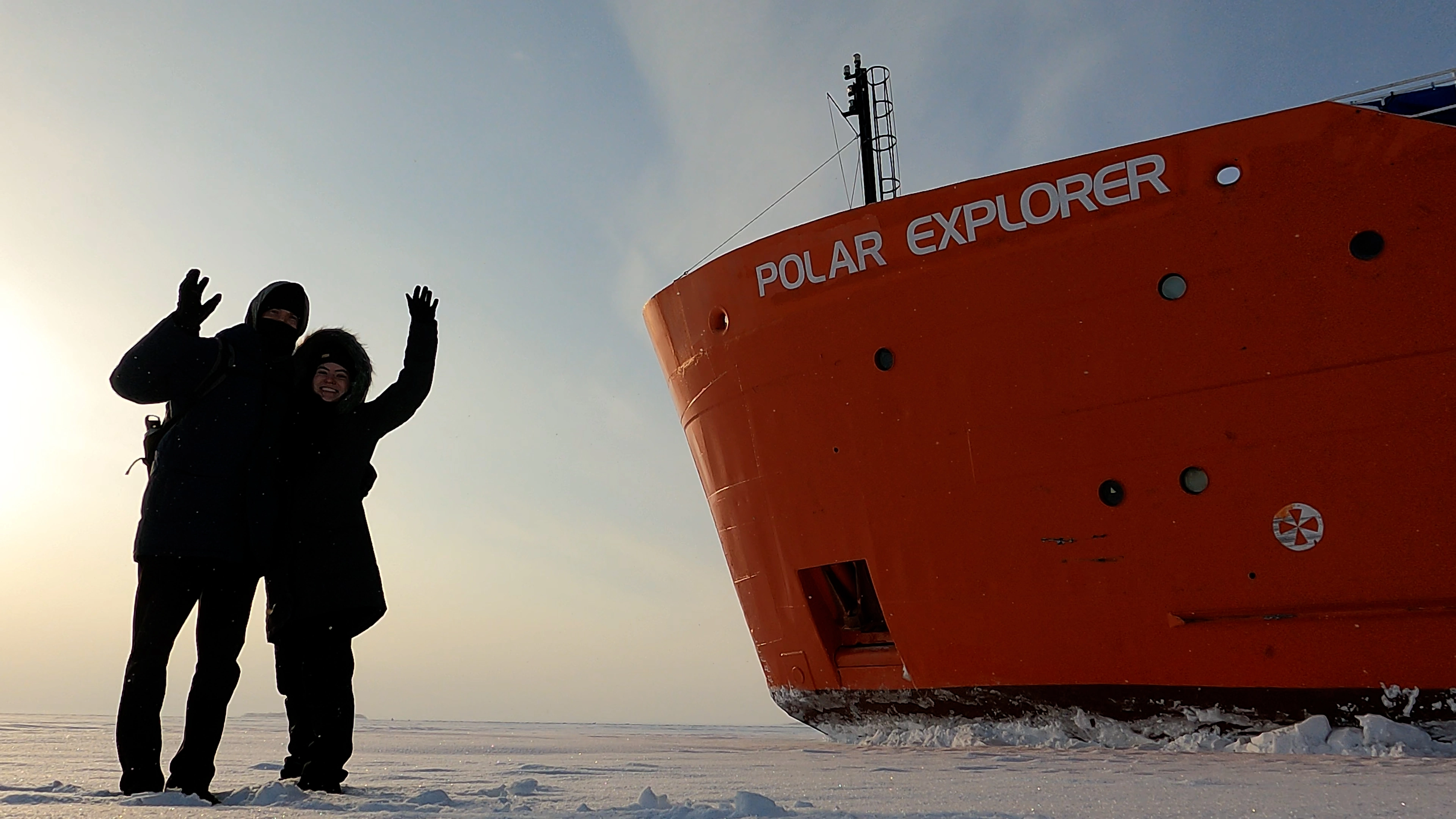
Every person who steps onto the frozen Bothnian Bay carries the same expression for the first thirty seconds: a mix of disbelief and wonder that is hard to fake and that photographs read instantly. Your job as a portrait photographer on the ice is simply not to miss it.
Shoot at eye level or lower. Portraits shot at eye level feel personal. Portraits shot from below eye level, crouching or even lying on the ice with sky above the subject, feel epic. Both work. Alternate between them and you will have a natural range without trying.
Use the ship as background. Position your subject with the Polar Explorer's hull behind them and the ice-channel foreground visible. This tells the viewer where you are in a way no other background can. The ship removes all doubt from the photograph.
Capture movement. Walking across the ice, hands out for balance, breath visible in the cold air: these moments often produce stronger photographs than posed shots. Ask your subject to walk away from you, then call their name for the look-back.
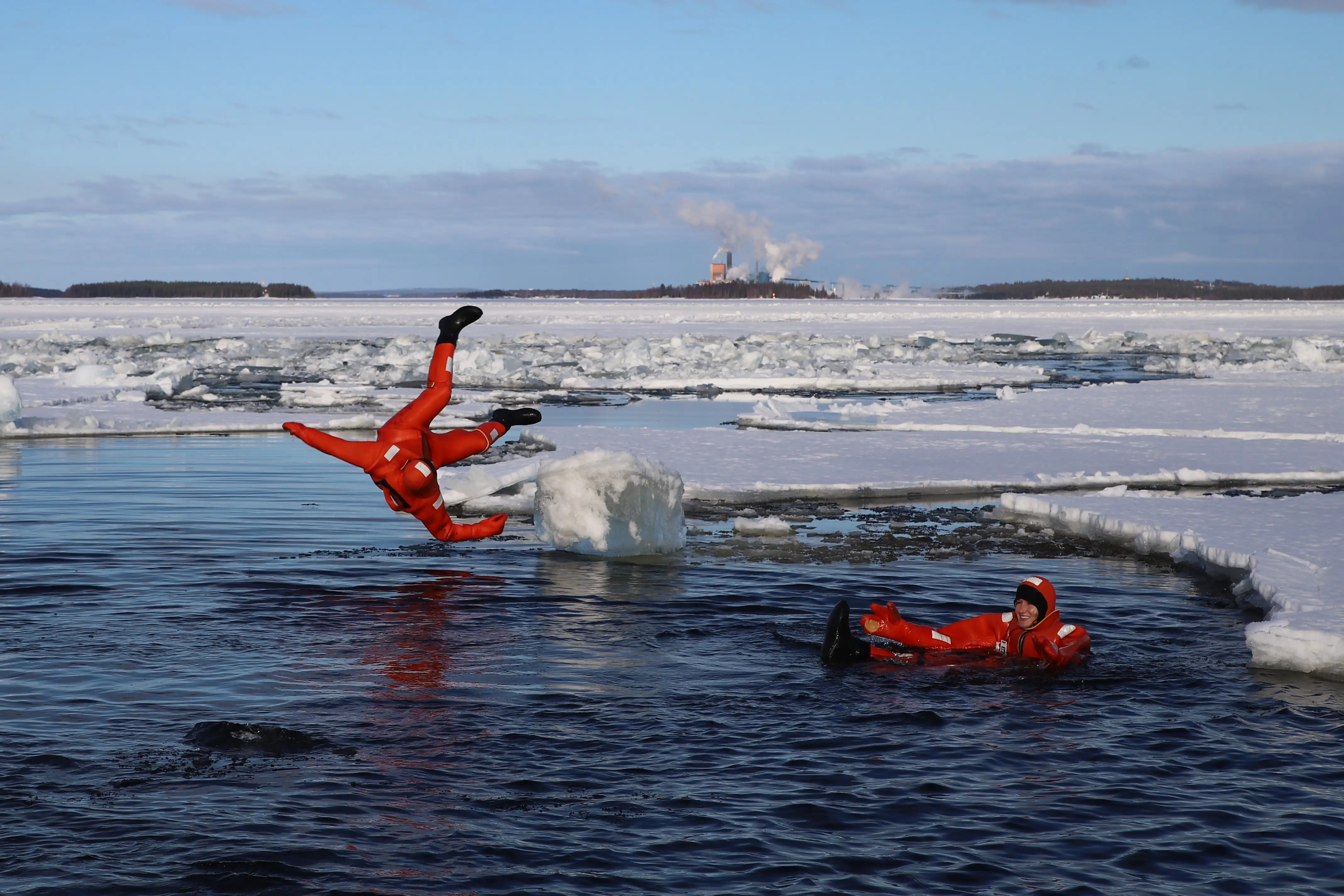
The survival suit portraits. The red and orange survivaö suits stand out sharply against the white-and-blue of the ice. A figure in a float suit against the open sea is an image that stops people. Do not overlook these as portrait subjects in their own right.
Breath in cold air. At minus twenty, breath shows as a dense plume that catches even in flat light. Captured in a portrait, it tells the viewer how cold it is better than any caption. Shoot when your subject exhales, not between breaths.
Camera and Gear Advice for Arctic Conditions
Photographing in minus twenty to minus thirty degrees Celsius is a different discipline from shooting in temperate conditions. Cold affects both cameras and photographers in ways that need some preparation.
Batteries
Cold kills battery life fast. A battery that lasts four hours in normal conditions may last forty minutes in deep Arctic cold. Carry far more batteries than you think you need, and keep spares in an inside jacket pocket where your body heat keeps them warm. Swap a cold battery for a warm one from your pocket and back again, and you stretch your shooting time a long way.
Condensation
Moving between the cold outside air and the warm interior of the ship creates condensation on lenses and inside camera bodies. Let your camera warm up gradually when you come back inside. Leave it in your bag for ten to fifteen minutes rather than taking it straight into a warm room. This prevents the condensation that fogs lenses and can damage electronics.
Gloves
Photography gloves with fold-back fingertip covers are essential for working the controls in Arctic conditions. Bare fingers go numb in under a minute at extreme cold and lose the dexterity you need for a dial or a touch screen. Thin liner gloves under shooting gloves give you the best balance of warmth and control.
Smartphone photography
Modern smartphone cameras are excellent for Arctic photography, and many explorers shoot primarily or entirely on their phones. Cold affects touch screens and batteries both. Keep the phone in a pocket between shots, and consider a warm-case accessory for longer use. The wide and ultra-wide lenses on current flagship phones handle the scale of the Bothnian Bay very well.
What to bring
- Multiple charged batteries for dedicated cameras, or a portable power bank for phones
- Photography gloves or thin liner gloves
- Action camera if you plan to photograph during the ice swim
- A lens cloth or microfibre cloth for clearing condensation and frost
- A wide-angle lens or wide phone setting for the big environmental shots
- A short telephoto (85 to 135mm equivalent) for isolating details and compressing the ship against the ice
- Drone for epic aerial shots
For full advice on what to pack and wear, the FAQs page covers clothing and equipment in detail, and you can reach the team through the contact page with specific questions.
The Essential Shot List for the Frozen Sea
Your shot list: ten photographs to make before you leave the ice.
- The full Polar Explorer from the ice, wide: hull, sky, and the channel of dark water in the foreground
- Looking up the bow of the ship from ice level, as low as you can get
- A portrait of your companion mid-stride on the ice, with the ship behind them
- The pressure ridges close up, in directional light that reveals their texture and depth
- The edge of the ice channel: dark water, floating broken ice, and the ship's hull above
- Your own breath visible in the cold air (hold your phone at arm's length and exhale towards it)
- Ice macro: bubbles, layers, frost crystals, whatever the surface directly at your feet reveals
- The horizon: true, flat, uninterrupted Arctic horizon with the sky above and ice below
- The moment of ice-swim entry or exit, if your companions are participating
- A wide shot of the full scene: ship, ice, explorers, sky, showing the complete context
Beyond the Camera: Being Present
Here is a note that sits slightly outside the remit of a photography guide, but it feels important to include.
Some of the explorers who come ashore on the frozen Bothnian Bay put their cameras away after a few minutes. Not because they have run out of ideas or because the light is bad. Because they realise that standing on a frozen Arctic sea, in real silence, under a sky that goes on forever, is something they want to be inside of rather than just record.
There is nothing wrong with this. The photographs you take will be good. But so will the five minutes you spend standing very still, looking at the horizon, letting the scale and the silence of the place arrive. Some people cry. Some laugh. Some just breathe. All of these are fair responses to something this rare.
The frozen sea waits for nothing. It exists for only a few months each year, at this latitude, at this depth. The Polar Explorer Icebreaker makes it possible to stand on it, and that fact alone is worth a moment of attention. Your camera will be ready when you pick it up again.
Lapland in winter is one of the strangest, most beautiful places you can stand. The frozen Bothnian Bay is a step beyond even that. Come with your camera. Come with warm clothes and spare batteries. Come ready to be surprised. The ice will do the rest.
Step Onto the Frozen Sea
Book your Polar Explorer Icebreaker expedition and walk on the Bothnian Bay this winter. Departures run through the winter season in Swedish Lapland.
Visit icebreaker.fi/booking to reserve your place on the ice.
Follow the Explorer. Once in a lifetime.