.webp)

Is the Arctic ice swim safe? An honest guide to the float suit and the cold
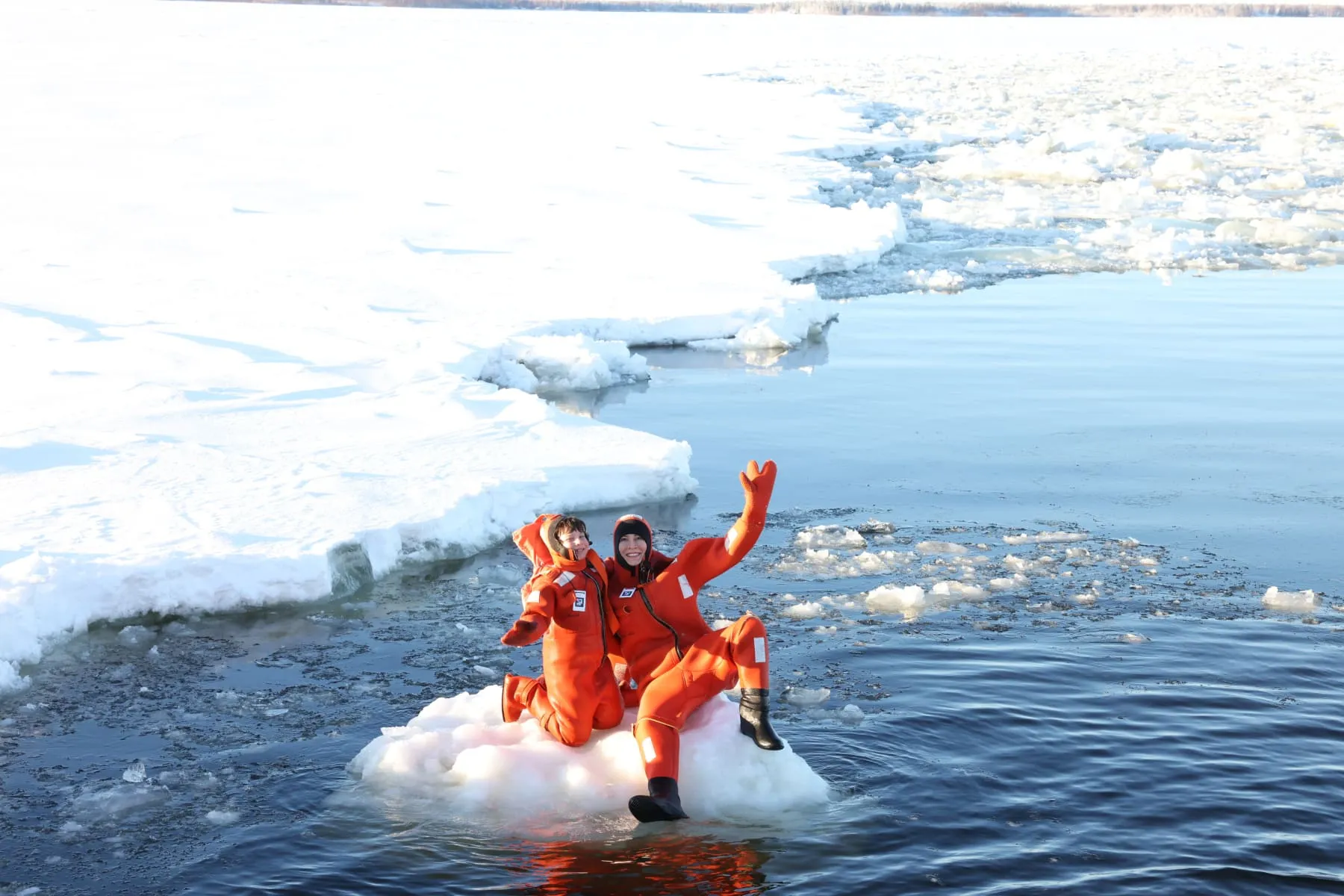
Floating in a frozen sea sounds like the kind of thing that should come with a warning label. Below-freezing water, Arctic air, a hole cut in the ice. It is reasonable to ask whether it is actually safe before you decide to do it.
The short answer is yes, when it is run properly. The longer answer is worth reading, because understanding why it is safe is also what lets you relax and enjoy it. Here is the honest version.
The float suit does the hard part
The thing that makes the Arctic ice swim safe is not bravery. It is the suit. You wear an insulated survival float suit, the same kind of standard maritime safety gear used in cold-sea operations, not a thin wetsuit. It does two jobs at once.
It keeps you floating on the surface on its own, so you bob like a cork without having to swim or tread water. And it insulates your core from the cold so your body stays protected while your face and the water do all the dramatic part.
You are not swimming in the way the word usually means. You are floating, supported, with your warmth held in.
That is why people who cannot swim do this every day of the season. The suit removes the part that would otherwise be dangerous.
What the cold actually does to your body
When you first enter cold water, your body reacts. Your breathing quickens and your heart rate jumps for a few seconds. This is the cold-shock response, it is completely normal and it passes quickly.
The reason it is not a problem here is that the suit keeps you afloat and insulated, so you are never fighting to stay up while your body adjusts. You float, you breathe through the first sharp moment, and then it settles into something that most people describe as strangely calm, even euphoric.
The discomfort people imagine, gasping, flailing panic, comes from cold water hitting an unprotected body that then has to keep itself up. Take away the staying-afloat problem and insulate the core, and the cold becomes a sensation rather than a threat.
The crew is the other half of the safety
Equipment alone is not the whole story. The swim is supervised the entire time. The crew helps you into the suit and checks it, the area you float in is enclosed and watched, and you are never out there alone or unobserved.
You go in for as long as you want, the typical float lasts a few minutes, and you come straight back to a warm interior to thaw out. Nobody is pushed, and there is no pressure to stay in. It is entirely your call.
The crew knows what a cold-shock response looks like and what a comfortable, happy floater looks like. They have been out there the whole season. You are not a test case.
Who should check with a doctor first
The float is optional, and most people who complete it in good health have no issues. But some conditions warrant a conversation with your GP before you go.
Serious cardiovascular conditions, uncontrolled high blood pressure, epilepsy, and recent surgery are the main ones. If you have any active heart condition, check with a doctor. The cold and the physical reaction are mild by cold-water standards, the suit handles most of it, but if your heart has been under strain, it is the right conversation to have first.
If you are not sure, the safest move is to ask. The crew can also advise on the day, and skipping the swim does not affect anything else about the expedition. The icebreaking, the walk on ice, and everything else on board are all still yours.
What is left
What is left is the experience itself: the sharp first breath and then the deep, surprising calm of floating in a frozen sea. Go in knowing how it works, listen to the crew, be honest about your health, and the only thing left to manage is the grin you will have afterwards.
Full health and clothing details are at the FAQs page.
Follow the Explorer.