.webp)

Northern lights in Lapland: when and how to actually see them
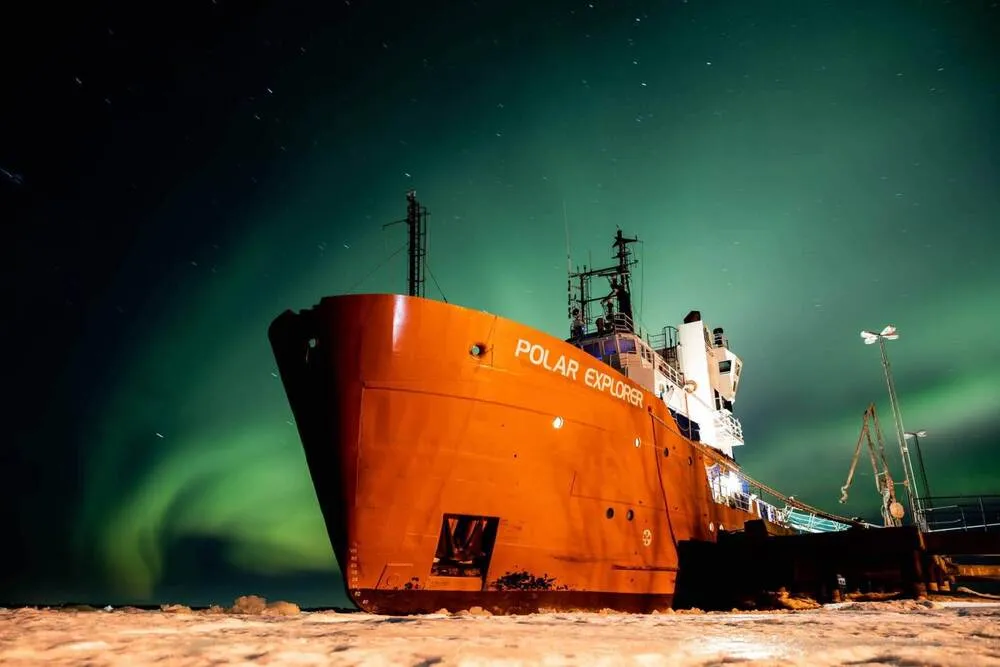
Everyone arrives in Lapland half hoping the sky will put on a show, and a lot of people leave without ever seeing it. The northern lights are real, they are spectacular, and they are also shy, unpredictable, and easy to miss if you treat them like a scheduled event.
They are not a scheduled event. Here is how they actually work, and how to give yourself the best honest chance of standing under them.
What the northern lights actually are
The aurora is the sun's doing. Charged particles streaming off the sun hit the Earth's upper atmosphere, and as they collide with gases up there, the gases glow. Oxygen tends to produce green and sometimes red, nitrogen adds purples and blues. The Earth's magnetic field funnels all of this toward the poles, which is why the far north of Lapland sits in such a good position to see it.
What you are watching is essentially the atmosphere lighting up under a stream of solar particles. Knowing that does not make it any less moving when it happens.
When to look: darkness is everything
The aurora is out there all year. You simply cannot see it when the sky is bright. That is why the cold, dark months are the season: roughly from autumn through to early spring, when Lapland gives you long, dark nights.
The deep winter, when the icebreaker season is running, sits right inside that window.
You need real darkness, which means away from summer light and ideally on a clear night. Cloud will hide the show no matter how strong the aurora is.
When it comes to solar activity, Lapland's location is highly favorable. At a magnetic latitude of around 65 degrees North, you do not need a massive geomagnetic storm. A Kp index of just 2 is often enough for the aurora to appear on the northern horizon. When the Kp index reaches 3 or higher, it regularly produces dramatic overhead displays.
Where to look: away from the lights, toward open sky
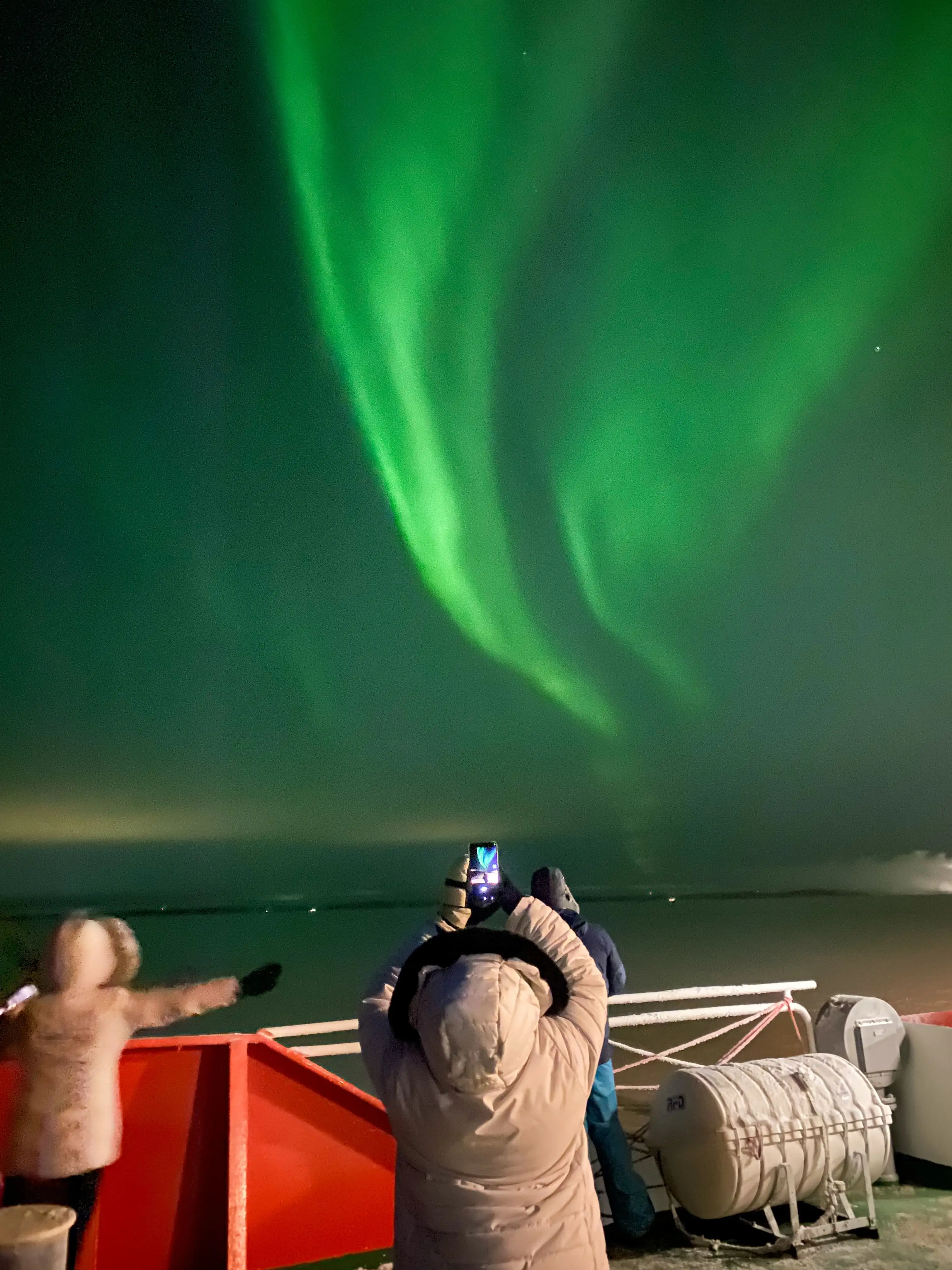
Light pollution is the quiet killer of aurora trips. The glow of a town washes out all but the strongest displays, so the single best thing you can do is get away from streetlights and look toward a dark, open horizon.
This is one reason the frozen Bothnian Bay works particularly well. Out on the ice there are no trees, no buildings, and no competing light sources. The horizon stretches in every direction, and the sky goes all the way to the ground. People who have waited nights in Rovaniemi for a clear view and then spent a day on the icebreaker often describe the bay as the best aurora position they found. There is nothing in the way.
How to improve your odds
A few habits make a real difference.
Give it several nights. One night is a coin toss. Three or four nights stacks the odds considerably, because you only need one clear, active sky.
Watch the forecast. Aurora forecast apps estimate activity levels and cloud cover a day or two out. They are not precise, but they tell you which nights are worth staying up for.
Be patient and stay out. The lights can appear for ten minutes and vanish, then return an hour later. People who give up at the first quiet stretch often miss the best of it.
Let your eyes adjust. Give yourself twenty minutes away from screens and bright light. A faint aurora that your phone camera misses is sometimes clearly visible once your eyes settle.
Managing expectations honestly
Not every night delivers. Cloud cover is the main spoiler, and it has nothing to do with the aurora itself. Some people come for a week and see a strong display on day two. Others have three clear nights and see only a faint shimmer. That is the honest picture.
What changes things is being in the right place for multiple nights, not just one, and treating it as a hunt rather than a guarantee. The people who come back with the best aurora stories are almost never the ones who booked one night for one reason.
How the icebreaker fits into aurora hunting
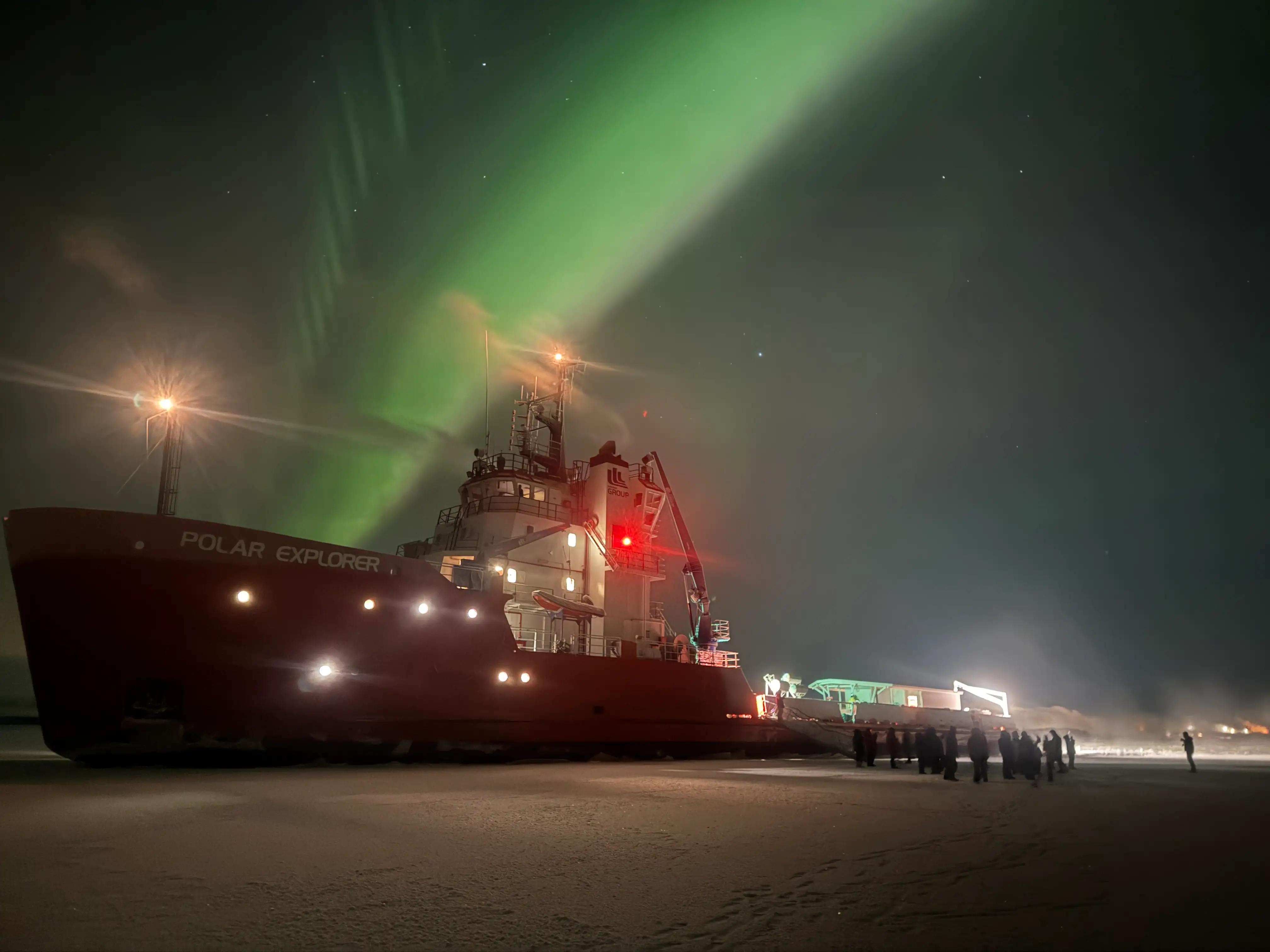
A day on the icebreaker does not guarantee aurora, but it does something useful: it gets you out onto a flat, dark, open expanse of sky at a time of year when the aurora season is in full swing.
If you choose a morning departure, your evening is free for aurora hunting. The afternoon light from the ice is often spectacular on its own terms, and if the sky clears after dark, you are back in Rovaniemi with the night still ahead.
Full icebreaker booking at icebreaker.fi/booking.
Follow the Explorer.