.webp)

What to pack for an Arctic icebreaker day: a winter layering guide
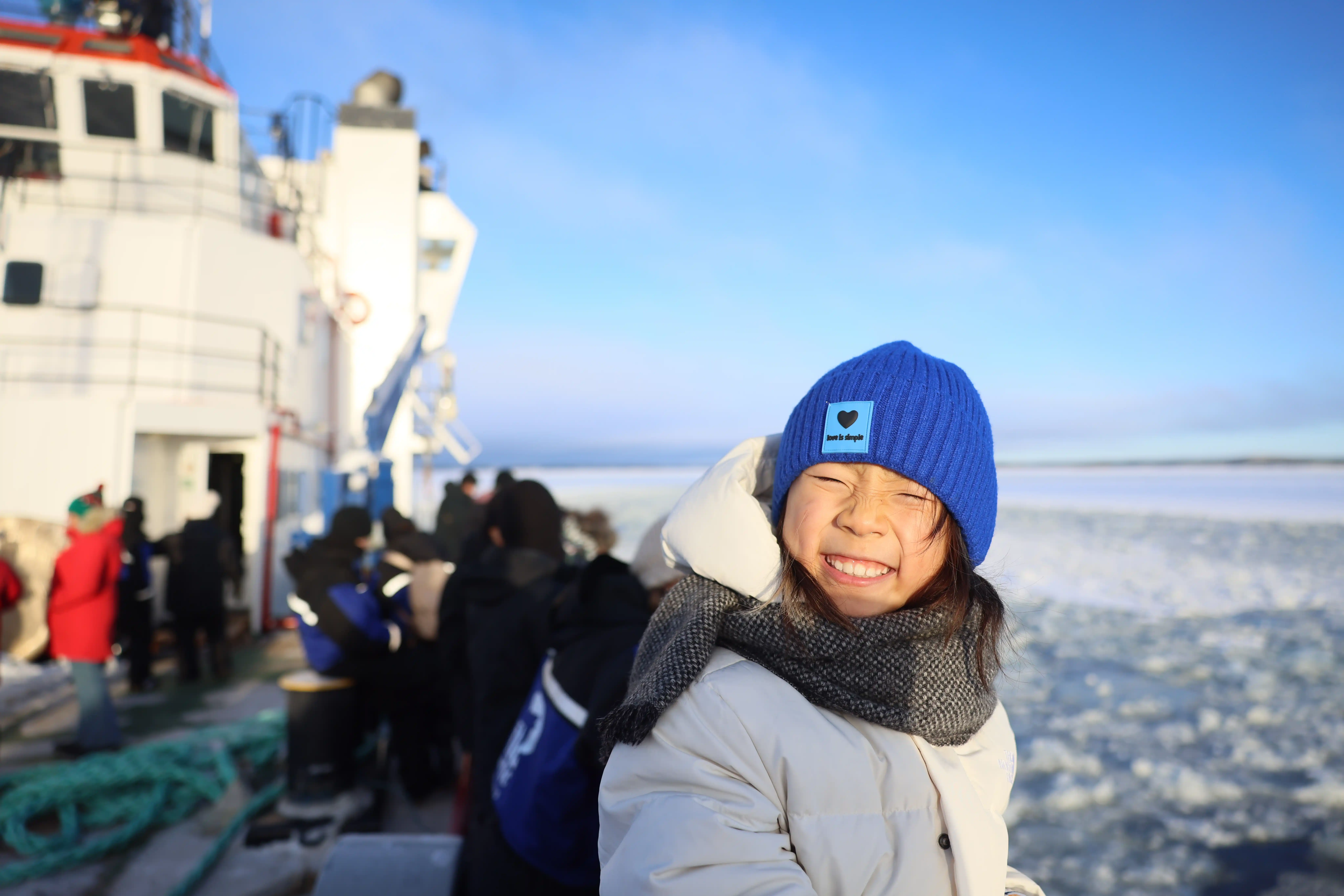
It is the morning of your icebreaker day, and you are standing over a pile of clothes wondering if you have packed wrong. Too little and you will be miserable out on the ice. Too much and you will overheat the moment you step back inside the ship.
The good news is that dressing for a day on the frozen Bothnian Bay is not complicated, once you understand the one rule underneath all of it.
The one rule: layers, not bulk
Warmth in the Arctic does not come from a single thick coat. It comes from layers, with pockets of air trapped between thinner garments that you can add or shed as you move between the open deck, the ice, and the warm interior of the ship.
A day on an icebreaker swings between those settings constantly. So the goal is not maximum padding, it is control. Three thinner layers you can adjust will beat one heavy coat you are stuck inside.
What the ship provides
Before you pack, know what you do not need to bring.
The survival float suit for the ice swim is provided on board. You do not need to bring your own wetsuit or drysuit, the crew equips you before the swim. The suit is the same standard maritime safety gear used in cold-sea operations, and it insulates your core and keeps you afloat on its own. You also do not need to bring hot drinks, and the Polar Explorer features a fully equipped restaurant offering 1, 2, and 3 course lunches (15, 30, and 38 EUR), while the Arctic Explorer has a small cafe.
Base layer: keep sweat off your skin
Start with a base layer of merino wool or synthetic thermal, top and bottom. Its job is to pull moisture away from your skin, because damp skin is what makes you cold, not the air itself.
Avoid cotton here. A cotton shirt soaks up sweat and holds it against you, and on a long cold day that is the quickest way to start shivering.
This layer should sit snug, not tight.
Mid layer: trap the heat
Over the base goes your insulation: a fleece or light down jacket, with warm trousers or thermal leggings under your outer pants. This layer does most of the warming. If you tend to run cold, add a second thin mid layer rather than one bulky one, you keep the option to peel back when you head inside.
Outer layer: block the wind
The outer shell stops the wind and any snow. A windproof, water-resistant jacket and trousers are ideal. Out on the open ice there is nothing to break the wind, and wind is what turns manageable cold into biting cold, a factor monitored closely by Finnish weather experts. The shell does not need to be heavy. It needs to be windproof, and it needs room for the layers underneath.
Hands, head, and face fail first
The cold finds your extremities before anything else. Bring a warm hat that covers your ears and a neck gaiter you can pull up over your chin and nose. For hands, a thin liner glove inside a warmer mitten gives you the best combination: dexterity when you need it, insulation when you do not.
Do not bring gloves you are precious about. You will be touching ice.
Feet: waterproof and insulated
Winter boots rated for at least -20°C to -30°C are the safest choice. Once you are on the ice, your feet are in contact with frozen sea. Thin-soled boots will let that cold through quickly.
Wool or thermal boot liners add a useful extra layer. If your regular winter boots are good for city cold but not Arctic ice, this is the one piece of gear worth upgrading before the trip.
What not to over-pack
You will be on a ship, not on a wilderness expedition. There is a warm interior to return to throughout the day, and the crew is equipped for the conditions. You do not need emergency kit, hand warmers, or chemical heat packs unless you run very cold. A reasonable winter wardrobe for northern Europe covers everything.
The outdoor time comes in concentrated bursts: the deck while the ship is breaking ice, the walk on the ice, and the float. Between those moments you are inside, warm.
Temperature ranges by month
Expect typical outdoor temperatures to range from -5°C to -15°C in November and December, -10°C to -25°C in January and February, and -5°C to -15°C in March and April.
A practical checklist
Before you leave for the ship:
- Thermal base layer (top and bottom), worn, not packed
- Mid-layer fleece or down jacket
- Outer shell: windproof jacket and trousers
- Warm hat covering the ears
- Neck gaiter
- Insulated, windproof gloves or mittens
- Winter boots (insulated, waterproof)
- Wool or thermal socks
- Camera with a spare battery kept in an inside pocket (cold kills batteries fast)
- Small bag or daypack for layers you peel off inside
Leave the bulky stuff at the hotel. The ship is not a place to store luggage.
Full kit guidance and any gear rental options are on the FAQs page.
Follow the Explorer.