.webp)

What your body does in sub-zero water: a first-timer's guide to cold-water floating
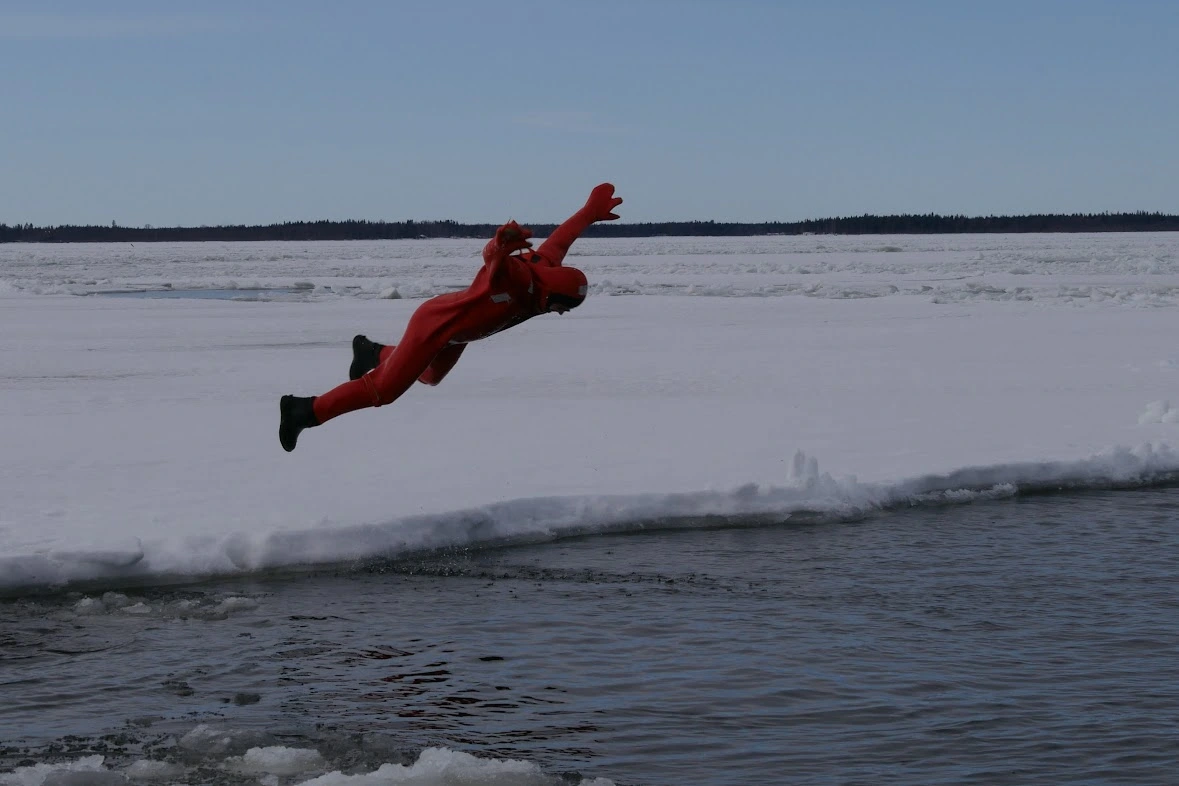
Almost everyone who floats in the frozen Bothnian Bay says some version of the same thing afterwards: they expected to hate it, and instead they came out grinning. The guides on the platform see it every day of the season. The gap between dread and delight is not a fluke, it is your body doing exactly what bodies do in cold water, and once you understand the sequence, the whole thing stops feeling frightening and starts feeling fascinating.
Here is what is actually happening to you, second by second.
The first ten seconds: the cold-shock response
The moment cold water reaches your skin, your body reacts before your mind can. Your breath catches and quickens, your heart rate climbs, and there is a sharp involuntary intake of air. This is the cold-shock response, and it is the part people are really afraid of without knowing its name.
It feels intense. It is also brief, usually fading within the first half minute, and in a supervised float where a survival suit holds you up and insulates your core, it is simply a sensation to ride out rather than a danger to fight. Knowing it is coming is half the battle. When it hits, you are not in trouble. You are just at the start.
The next minute: your body adapts
Once that first surge passes, something shifts. Your breathing steadies, the panic-adjacent feeling drains away, and your body settles into the cold. Blood moves to protect your core, your skin stops screaming, and the water that felt impossible a moment ago becomes something you are simply in.
The suit is doing the work of keeping you afloat and insulated, so there is nothing to struggle against. This is usually the point where people stop bracing and start noticing where they actually are: on their back, in a frozen sea, under an enormous Arctic sky.
The rush: why it feels so good
Then comes the part that surprises everyone. Cold-water immersion triggers a release of adrenaline, endorphins, and other signals from your nervous system. The result is a clean, sharp sense of being intensely alive, the kind of high that people chase in all sorts of ways and rarely get this directly.
It is not subtle. People come out of the water laughing, wide-eyed, sometimes a little stunned. That euphoria is your nervous system rewarding you for doing something hard and surviving it well. What the guides notice is that people tend to talk about this float for the rest of the day.
The water temperature sits just below freezing (around -0.2°C for the brackish Bothnian Bay) at the surface, which is part of what makes the reaction so immediate and so vivid.
Why doing something scary, safely, changes the day
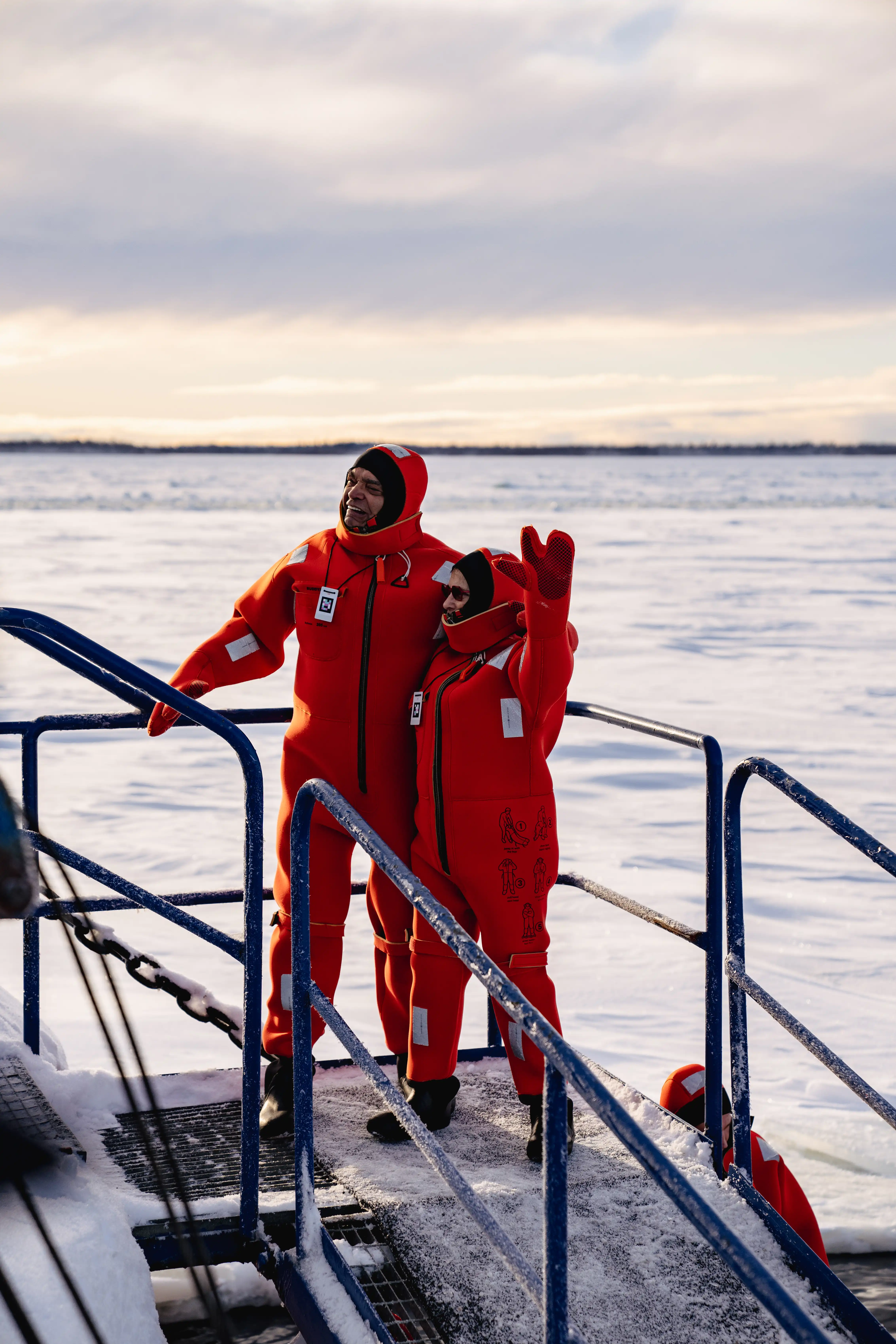
There is a psychological layer underneath the chemistry. The ice float sits right at the edge of your comfort zone, real nerve, real reward. It looks genuinely daunting, you do it anyway, and it turns out to be safe and even joyful. That combination is why so many people describe it as a highlight not just of the trip but of the year.
It is not that the cold changed you. It is that you found out you would step into it.
What this means for a first timer
If this is your first time, the useful thing is to know the order in advance. The sharp breath comes first and it passes. The calm comes second. The rush comes third. None of it requires you to be tough, fit, or experienced in cold water. The suit handles the safety, the crew handles the supervision, and your body handles the rest.
What you bring is the decision to go in.
The experience is optional on every departure and the crew explains exactly what to expect before you get into the suit. Full details at Arctic ice swimming in Lapland.
Follow the Explorer.